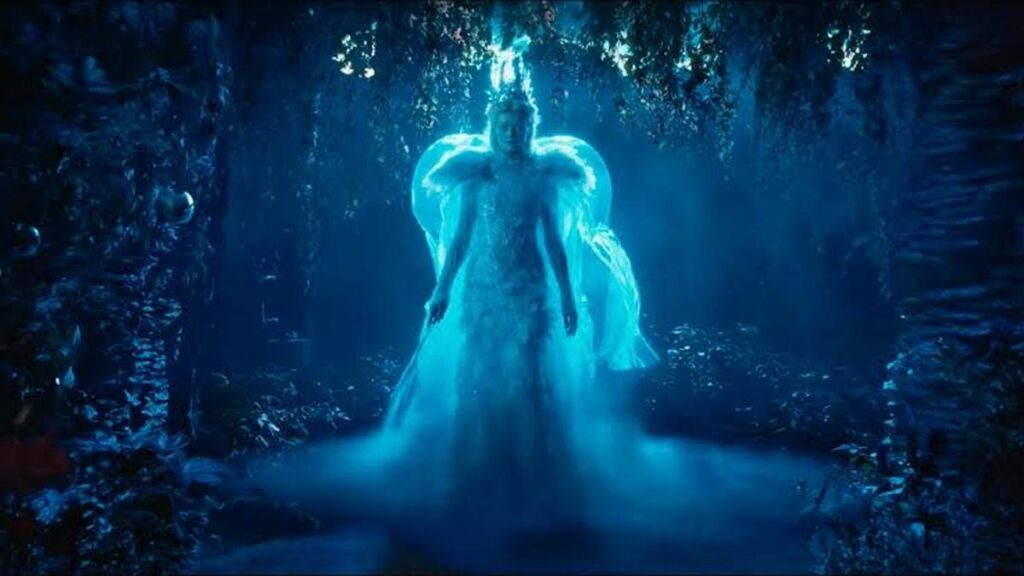
Netflix has moved The Magician’s Nephew from 1900 to the 1950s, and that one date decides the shape of every Narnia film that follows it. Digory Kirke and Polly Plummer are post-war children now, so the wardrobe they plant belongs to a different century.
The Narnia timeline change is visible in the first trailer. London is still repairing itself after the Blitz, and David McKenna and Beatrice Campbell play Digory and Polly as children of that city. CBR traced the change through the footage on 22 October 2026, and the first trailer is what confirmed it. Greta Gerwig wrote and directed the film, and it reaches theatres on 12 February 2027.
What exactly changed in Netflix’s Narnia?
C.S. Lewis set The Magician’s Nephew in 1900, with two Edwardian children slipping out of London into the Wood Between the Worlds. Netflix moved them to the 1950s. The plot survives the move: same children, same woods, same mistake with Jadis. What changes is the country they are escaping from.
One date moves six other books
Lewis published the books out of order and dated them tightly. The Lion, the Witch and the Wardrobe sits forty years after The Magician’s Nephew, and the remaining five cluster inside a single decade. Push the first book forward by fifty years and the wardrobe opens in the 1990s.
| Book | Published | Lewis’s setting | Netflix setting if the same gap holds |
|---|---|---|---|
| The Magician’s Nephew | 1955 | 1900 | 1950s (confirmed in the trailer) |
| The Lion, the Witch and the Wardrobe | 1950 | 1940 | 1990s |
| Prince Caspian | 1951 | 1941 | 1990s |
| The Voyage of the Dawn Treader | 1952 | 1942, shortly after | 1990s |
| The Silver Chair | 1953 | 1942 | 1990s |
| The Last Battle | 1956 | 1949 on Earth | Late 1990s |
Those later dates are arithmetic. Netflix has confirmed one date so far, which is the 1950s setting of the first film.
Why the Blitz is the part that breaks
The Pevensie children are in that house because London is being bombed. Evacuation is the whole reason four children are left alone in a huge house with a wardrobe in an empty room. Take the war out and the story needs a new excuse for their boredom.
There is no shortage of candidates. A family displaced by any number of later conflicts would still put children in a stranger’s house for a summer. The question is whether the replacement carries the same weight. Lewis wrote the evacuation from a war that had just ended, and children reading it in 1950 knew exactly what an evacuee was. A story that has already been told once, and told well, is harder to film than a new one.
What the 1950s buy and what the wardrobe keeps
Gerwig has said the rock aesthetics of the 1960s and 1970s feed into her vision for the film. A post-war London gives her ruins, black cabs and mid-century clothes to shoot, and Charn, the dead world Jadis destroys with a word, can carry the dread of a nuclear age. That is a real gain. The 1950s have more texture available to a camera than 1900 does, and a director who wants to shoot rubble needs a city with rubble in it. Critics and audiences split hard on this year’s adaptations too, and the widest gap was 54 points.
The wardrobe survives the change. It is built from a tree grown from an apple Digory brings back from Narnia. Move his childhood to the 1950s and he is an old man in the 1990s, which is exactly the gap Lewis wrote. The professor’s age arithmetic works at any starting date, because the interval is fixed and the interval is what matters.
What changes is the furniture. A wardrobe made in the 1950s is a mid-century object, and the attic it sits in belongs to a different kind of English house. That is a design decision, not a plot hole. Asking whether 1950s London beats 1900 is a comparison that tests the wrong thing.
The order to watch these films in
Start with the one Netflix is making. The Magician’s Nephew is the beginning of the world in Lewis’s own chronology. He wrote it last and set it first, and it is the only Narnia story that explains where the wardrobe came from. A viewer who meets Narnia through it will know why an apple matters before a lion speaks. Ranking a series and ordering it are different jobs, and a ranked list of the Harry Potter films answers only the first.
That is also why the date change is worth arguing about. The film is doing two jobs at once, opening a franchise and explaining its own furniture, and a 1950s London makes the second job easier to shoot and slightly harder to believe.
Netflix has not said when the sequel is set
Netflix has not said when the sequel is set. When it does, the 1990s setting either holds or breaks, and the answer tells you how much of Lewis’s calendar the franchise intends to keep. Until then, any claim about a modern-day Pevensie is a guess.
The film is in theatres on 12 February 2027. The trailer is the only source for the 1950s so far, and a trailer is a marketing document, which means a scene can move before release. More film and television arguments sit in Movies and TV.
Timeline decisions like this one now run across Netflix franchises. The streamer has ordered a 1950s Stranger Things prequel for 2028 while an animated series covers 1985.

Pingback: Netflix Orders a 1950s Stranger Things Prequel for 2028 - Siddharth Vira