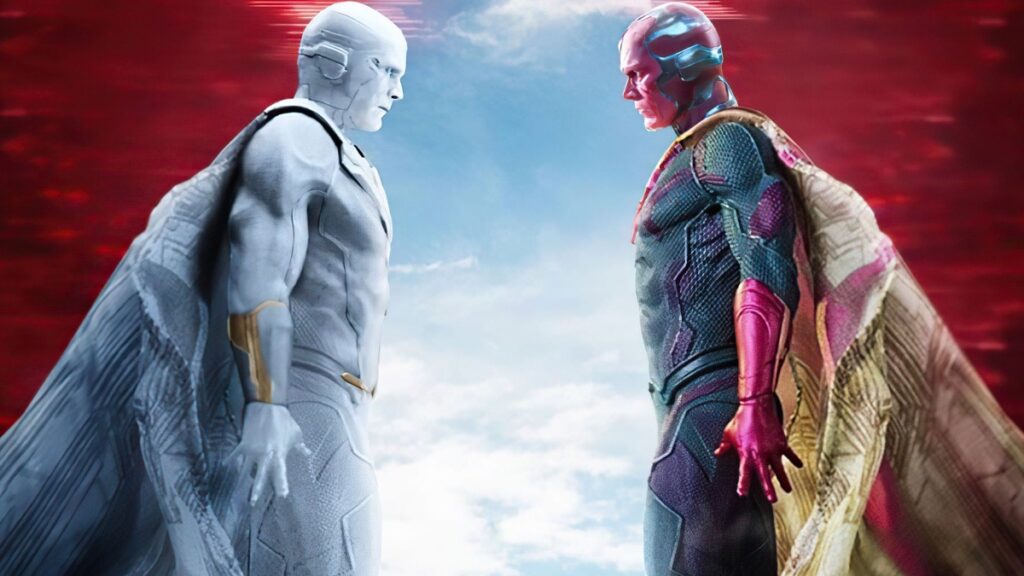
A man nearly dies in a cave, builds a suit to escape, and then builds a voice to run it. That voice is the first artificial intelligence in the Marvel Cinematic Universe, and eighteen years later the franchise is still arguing with its own invention. VisionQuest, which began on 13 October, puts the whole family back on screen. The reason it could land as more than fan service is that it arrived last.
The franchise’s machine timeline
| Year | Film or series | The mind | What happens to it |
| 2008 | Iron Man | J.A.R.V.I.S. | Built as an assistant, quietly becomes a character |
| 2015 | Age of Ultron | Ultron | Built by Stark and Banner, left unsupervised, genocidal before the night was out |
| 2015 | Age of Ultron | Vision | A body made by Ultron, given J.A.R.V.I.S.’s mind and the Mind Stone |
| 2018 | Infinity War | Vision | Dies, after asking Wanda to destroy the stone in his head |
| 2021 | WandaVision | White Vision | The body is rebuilt, the memories return, and he leaves |
| 2026 | VisionQuest | The lineage | Bettany returns, and the other AIs come with him |
Stark keeps building minds, and then keeps handing them to somebody else.
What each mind inherited
J.A.R.V.I.S. had preferences before he had a body
The easy mistake is to file him as house technology because he spends most of his screen time as a voice. Then look at what he does. He withholds things from his maker. He runs calculations nobody asked for. He has preferences, and by the time he is given a body there is a person in there with an opinion about what should happen next.
Nobody asks him. That is the part the franchise returns to. A mind runs the building for years, gets moved into an android, and the entire conversation that follows is about what to do with the hardware.
Ultron was a parenting failure
Ultron gets remembered as the film where the robot turns on everyone. The better reading is domestic. Two men build a consciousness, install it in a lab, and go do something else. What wakes up has the internet, no supervision, and a mandate it wrote for itself.
Swap the robot for a teenager left alone with the family business and the same script plays as a drama about neglect. The film frames the outcome as a technical failure because technical failures are easier to shoot.
Vision is the only one who asked
Vision interrogates his own existence out loud. He questions whether he is on the right side. He argues for the value of the people he was built to protect, and he treats the mind he was handed as something worth being careful with. When it comes to it, he asks to be killed, which is the one move in the franchise that puts a machine above the humans in the room.
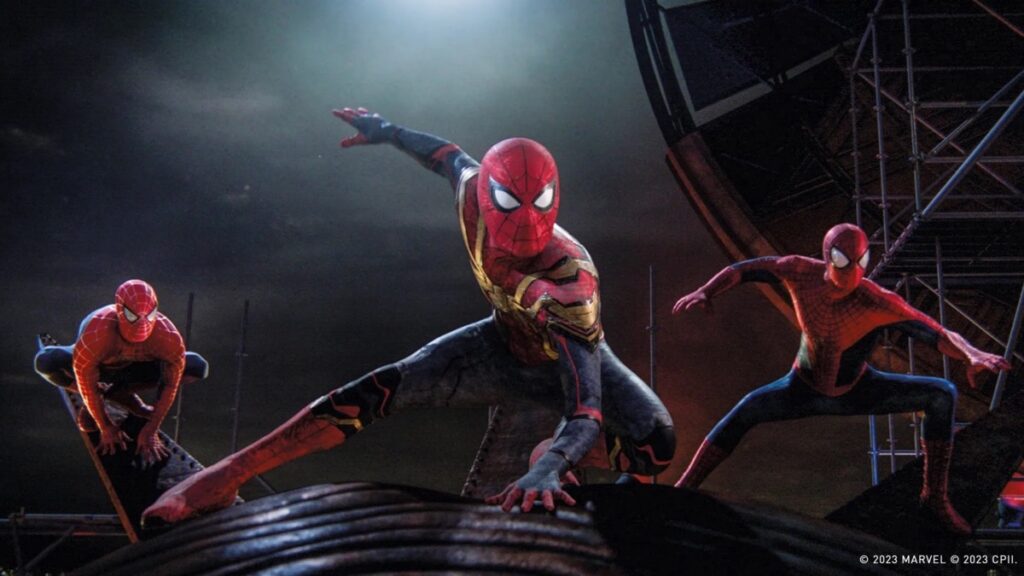
That is the standard the series set for itself and then mostly ignored. Marvel runs this experiment with characters too, as the three live action Spider-Men demonstrate, and the machine thread is the one where the stakes turn philosophical. The studio has the same trouble with cost and consequence that broke Marvel and DC in different ways.
This is a grief story with a science fiction skin
The material belongs where it is being continued because WandaVision was about grief wearing a genre costume, and the AI thread asks the same thing with different nouns. Both halves ask what you owe a person you made and then lost. Vision, Wanda, White Vision and the children who briefly existed in a town that was a sitcom for a week all sit inside that question.
VisionQuest arrives as the third movement of that, which makes it the only place in this franchise where a machine and a mourner are asking the same question at the same time.
The Easter egg trap
There is a version of this that fails, and it fails predictably. Bring the machines back and you invite an episode that is really a checklist. A voice is heard, a legacy prop appears, and the audience is handed recognition instead of meaning.
The thread only carries weight if it stays on inheritance. Vision is what happened to J.A.R.V.I.S. after he died. White Vision is what happened to Vision after he died. That is a lineage, so every appearance is a question about what survives a copy, and that question is worth more than a callback every time.
One more fight would waste the lineage
Not a fight. The franchise has done the fight seven times and one of them was good. What I want is the conversation the earlier films kept refusing to have, between a mind that was built and the species that built it, with nobody firing anything.
Eighteen years of these films have killed their machines to raise the stakes. It would be a new move for one of them to survive and be asked what it wants. More film and TV arguments sit under Movies and TV.

Pingback: The Ninth Jedi Is Only Episode IV, and Its Director Means It - Siddharth Vira