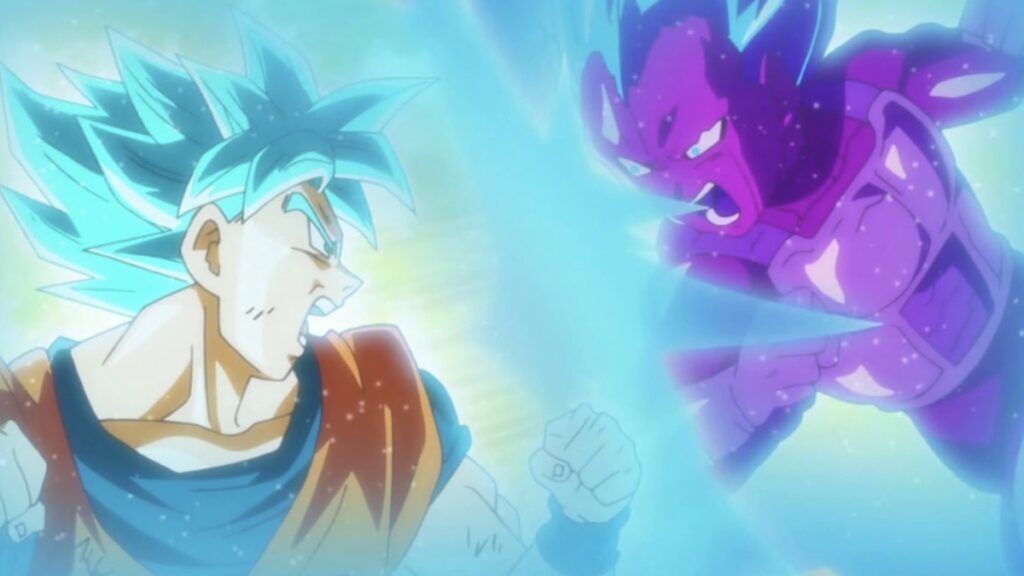
Every few months the timeline argument comes back, and it always arrives dressed as a maths question. Which Goku wins. The answers depend on which films you count, whether you count the games, and whether you accept a transformation that existed for eleven minutes in a nineties special. It cannot be settled, and fans are not the problem. The question is aimed at the wrong property.
What I am ranking instead
Forget feats for a minute. The interesting difference between the versions of Goku is what the story allows him to be. A paragraph of character in each, ranked by how much they actually tell you about the man, with one line for the hardest thing each of them is willing to give up.
The versions, ranked
1. Z Goku, the student
This is the version with a claim to being the best written, and the claim rests on something nobody praises: he is a terrible father and the story needs him to be one. He stays dead by choice for years. He hands the fight with the biggest threat in the universe to an eleven year old and calls it an opportunity. Read as parenting, it is indefensible. Read as a character who is still being taught, by King Kai and the Room of Spirit and Time and every opponent who beats him and leaves a technique behind, it is coherent.
What he gives up: his children’s childhoods, without appearing to notice.
2. Super Goku, the professional
The only Goku who has an economy. He farms. He takes work to pay for the farm. He exists inside a multiverse that ranks him officially rather than making him guess, and he is the first version comfortable being wrong in public, because a professional loses in a structure that survives the loss.
What he gives up: a tournament, because handing it over was more interesting to him than winning it.
3. GT Goku, the mascot
Turned into a child and put on a show that needed a recognisable face more than it needed a character arc. Most of the criticism is really aimed at the series around him, because the assignment was merchandising and he does that job with surprising competence.
What he gives up: his age, which is a strange thing for a franchise to take from its own hero.
4. Daima Goku, the rerun
Small again, forty years later, and this time on purpose. The interesting thing about Daima is that shrinking Goku is clearly a decision the franchise keeps returning to when it wants a lighter, more exploratory story. Two series have now used the same trick for two different reasons, and only one of them was criticised for it.
What he gives up: nothing important, which is exactly what makes it a comfort watch.
5. Movie Goku, the highlight reel
A ninety minute film has no room for a training subplot, so the movie version is Goku distilled to the parts an audience already recognises. Useful as evidence of what people want from him, useless as a character study.
What he gives up: everything except the fight, because that is all the runtime allows.
The one trait that never changes
Across every version, the constant is that he will always choose the next opponent over whatever he already has. Z does it with his kids. Super does it with his universe. GT does it with his own age. Movies do it in the first act because they have no second act to spare.
The versions differ in what they are permitted to sacrifice, and that is the real spectrum. It is also why the strongest version is the one nobody discusses.
Why feats are the wrong axis
Power level is the one quality a character cannot express. Whether a version can beat a god is decided by whoever is writing that month, and it is the entire reason the power scaling argument collapsed in this franchise decades ago. Nobody remembers a tier. People remember a farmer who cannot stop looking for a fight.
The ranking I would actually defend
Put Z first, Super second, and treat the rest as experiments in tone rather than candidates for the throne. That ordering has nothing to do with who wins, and everything to do with which version you could describe to somebody who has never seen a single episode.
If your list has a game character at the top, that is a list about mechanics. It is a perfectly good list. It is just answering a question about numbers when the interesting question was always about the man.