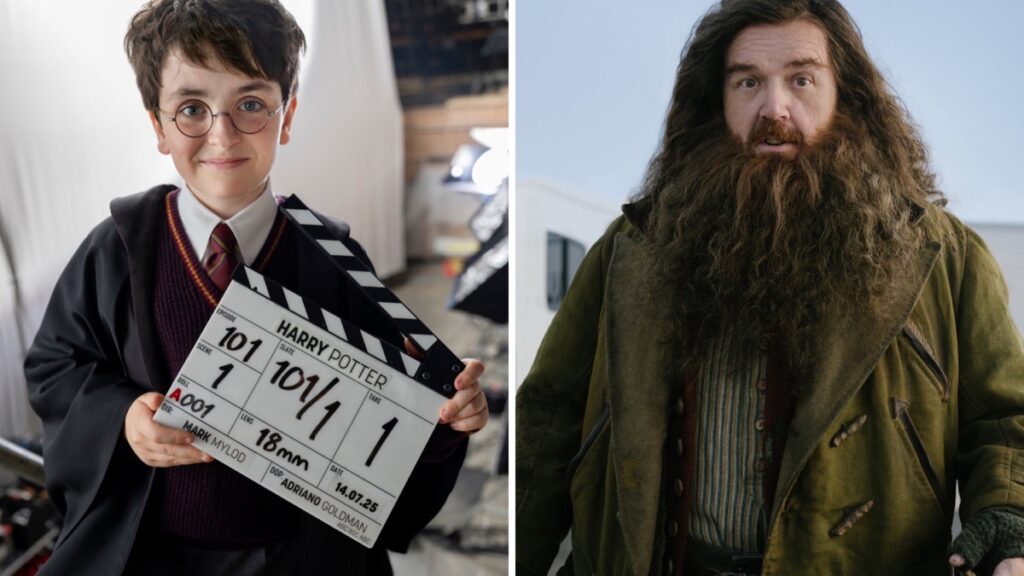
Every reader has a list of what the films got wrong, and a television series can fix most of it. The harder question is what happens when a story has already been told to you once, by people who told it well, in pictures you have been looking at for twenty-five years.
What the films cut, and what it cost
| In the books | In the films | What a series gets back |
| Peeves | Never appeared | A running source of chaos in the castle |
| The house-elf thread and S.P.E.W. | Reduced to a handful of scenes | The series’ argument about who the magical world keeps |
| The Marauders’ backstory | A photograph and a couple of lines | The reason the adults are all damaged |
| Ginny Weasley | Present, rarely a person | An actual character instead of a plot reward |
| Voldemort’s family history | Mostly trimmed from the sixth film | Why the villain is the way he is |
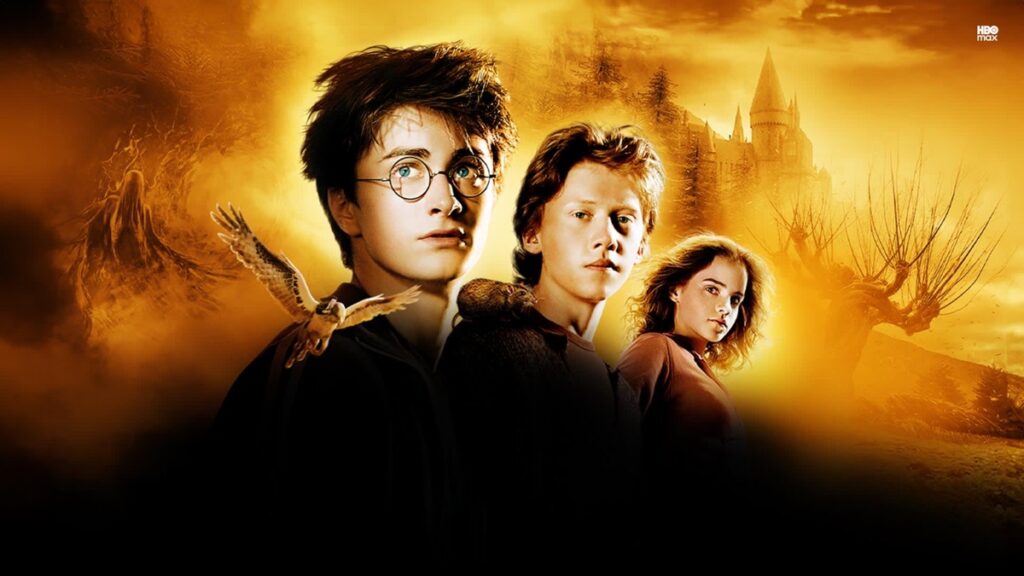
The losses were not laziness. Eight films covering seven books at roughly two and a half hours each is about twenty hours of screen time for a story that reads as sixty, and something has to go. The films kept plot and dropped texture, which is why they feel efficient and oddly unlived in. The ranking of all 8 Harry Potter films puts Prisoner of Azkaban at the top.
Runtime is the show’s real advantage
Give a season to a single book and the shape changes immediately. Side characters stop being cameos. The mystery structure of the early books, which runs on red herrings a film cannot afford, gets its rhythm back. School life stops being establishing shots and becomes the substance, which is what most readers were there for in the first place.
That part is not in dispute. Everyone agrees the series will be closer to the page.
The films are already the version in people’s heads
The films became more than an adaptation of the books. For a large share of the audience they are the version of the books already stored in the head. Merchandise, theme parks, rereleases and a permanent streaming home have reinforced that since 2001.
So the show competes with a memory that has had twenty-five years of reinforcement. Memories do not have to be accurate to win.
Some adaptations fade and some become the canonical picture. Films that arrive while a book is still climbing, cast with children who age at roughly the right rate across a decade, get to grow up alongside the readership. That embeds them in a way a single film or a reboot never manages.
The show’s most valuable asset is the audience, and its biggest constraint is that the same audience has already seen this story done once, in the form that taught them to care about it.
Casting is a trap in both directions
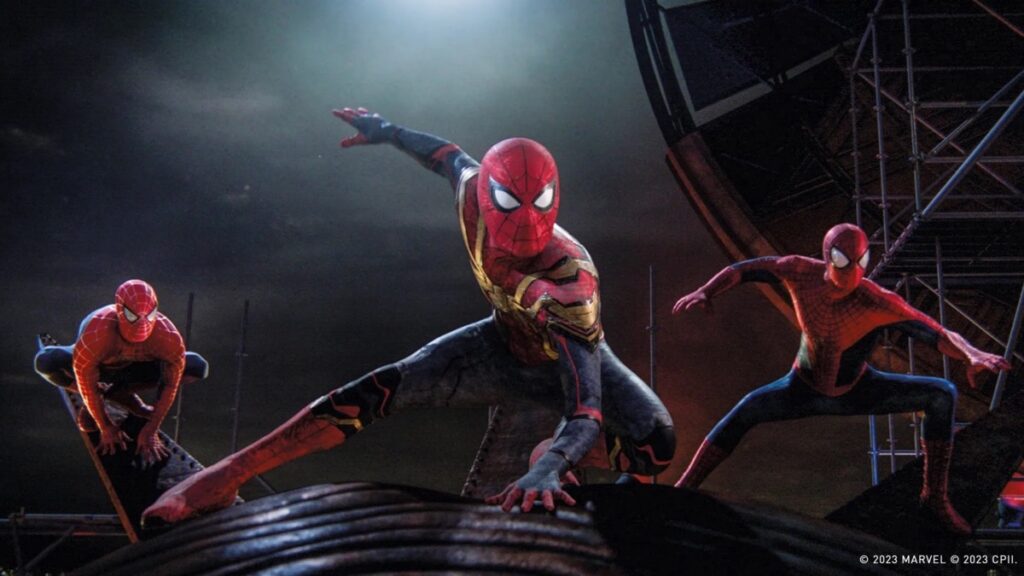
Cast actors who resemble the film cast and the show inherits a comparison it cannot win. Cast against type and part of the audience spends the first season adjusting rather than watching. There is no neutral option, because the previous version owns the default image of every character. Spider-Man shows the same trap from the other side, with three live-action runs and three different ideas of who Peter Parker is.
The films never had this problem. In 2001 there was no prior image to beat, which is exactly why their choices became the standard rather than a proposal. The new production does have one advantage: a longer runway. It was renewed for a second season in May 2026, and that season is already filming before the first one has aired. Dobby has a credited actor for the second season, which is the kind of decision that only makes sense if you are building for seven seasons, one per book.
Fidelity is not the goal
A scene can be lifted from the page word for word and fail on screen. The reason it worked was interior, and prose can carry things a camera cannot photograph. Adaptations that treat the text as a checklist produce shows that are accurate and inert, where the audience recognises every beat and feels almost nothing.
The real editorial decision is which of the books’ systems to dramatise, and where to invent something the page only implied. Get it wrong in either direction and the show suffers. Game of Thrones broke structurally while it still had books to adapt, and running out of source material only made the crack impossible to hide.
The test the show faces now
It will not be judged on whether Peeves appears, or on how many scenes from the earlier films get redone. It will be judged on whether the castle feels inhabited, and whether the friendships have room to be ordinary. And on whether a viewer who knows every line still finds a scene they did not know they were missing.
Success looks like this: by the third season, people stop comparing it to the films, because it has become a different thing worth watching on its own terms. That is a higher bar than fidelity. More film and series arguments sit in Movies and TV.
Pingback: 2026 Book Adaptations Split Critics and Audiences by 54 Points - Siddharth Vira
Pingback: The Gilded Age Season 4 Cut Two Stars It Had Already Promoted - Siddharth Vira
Pingback: What Is Patrick Stewart's Favourite Star Trek Episode? He Picks The Inner Light - Siddharth Vira
Pingback: Netflix’s Narnia Timeline Change Moves the Wardrobe Too - Siddharth Vira
Pingback: Dexter: Resurrection Season 2 Gives Harrison the Deb Problem - Siddharth Vira