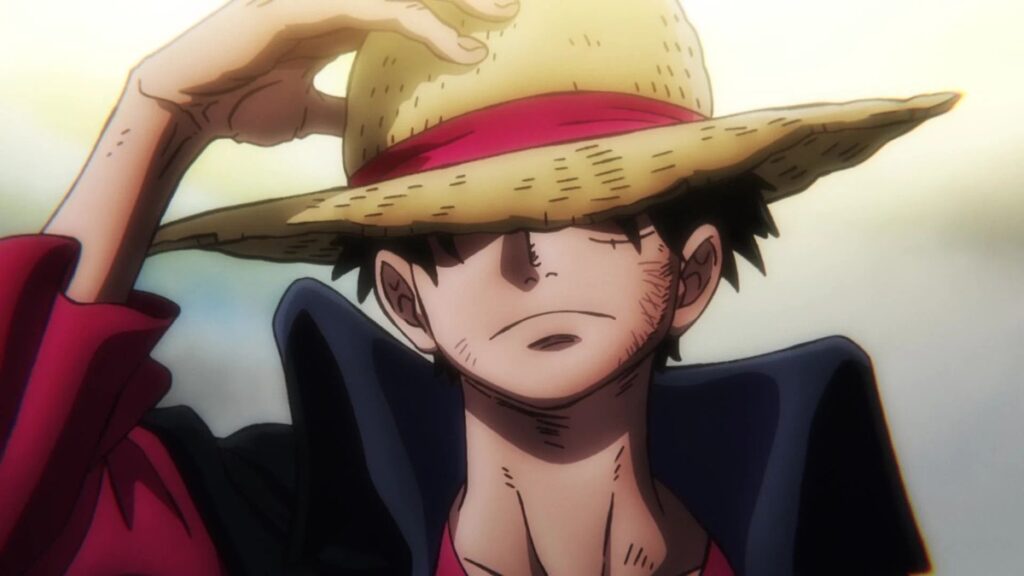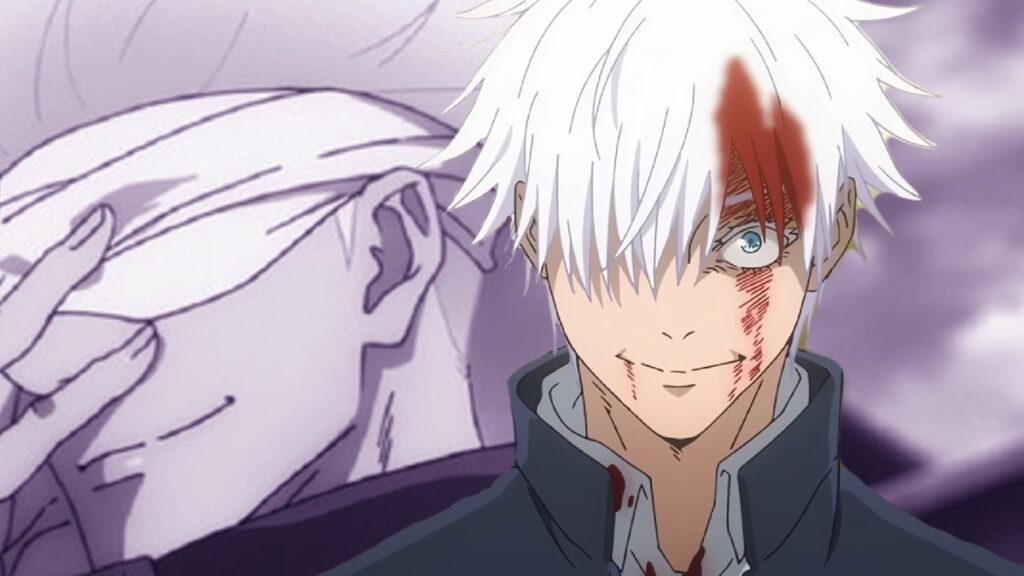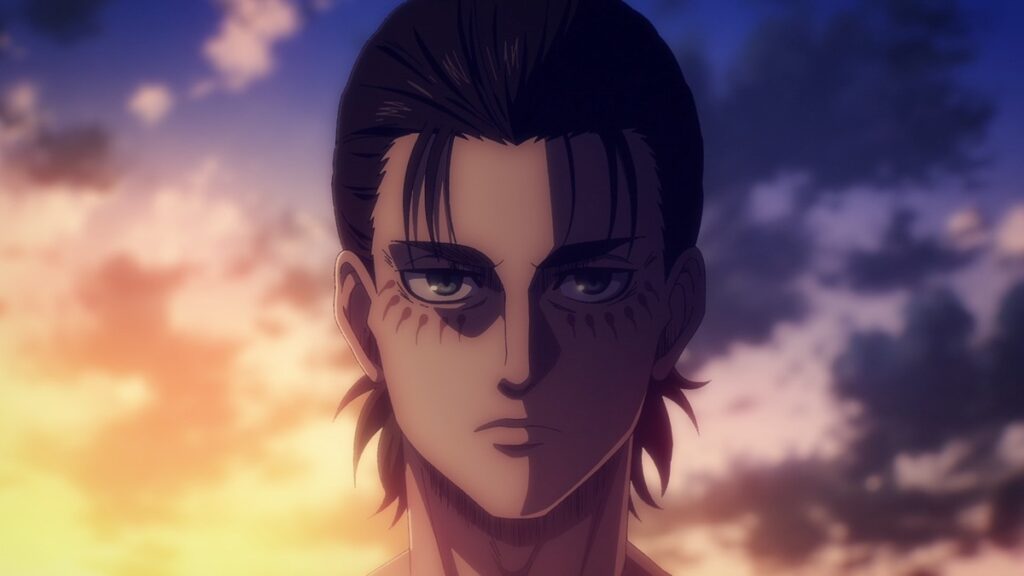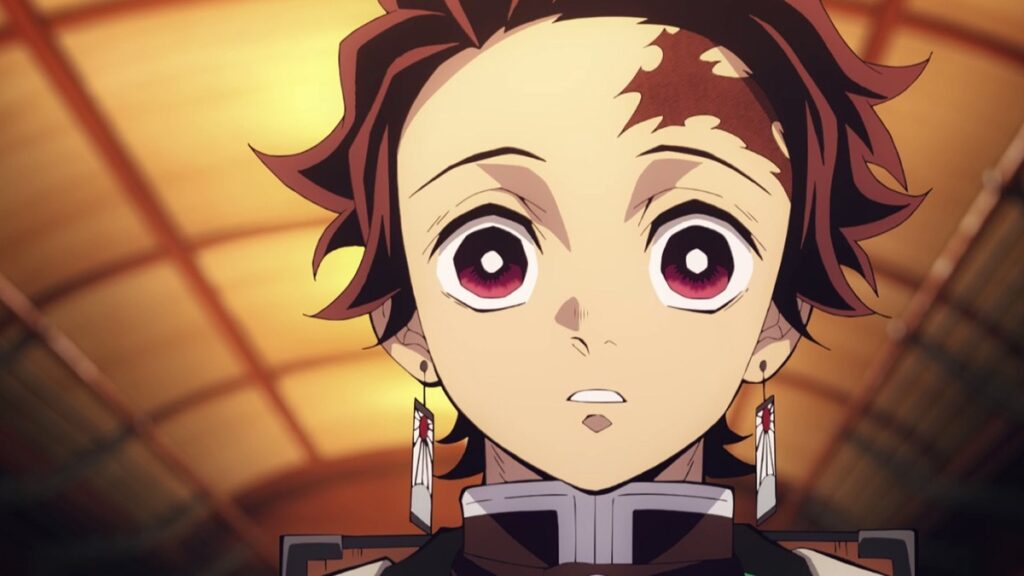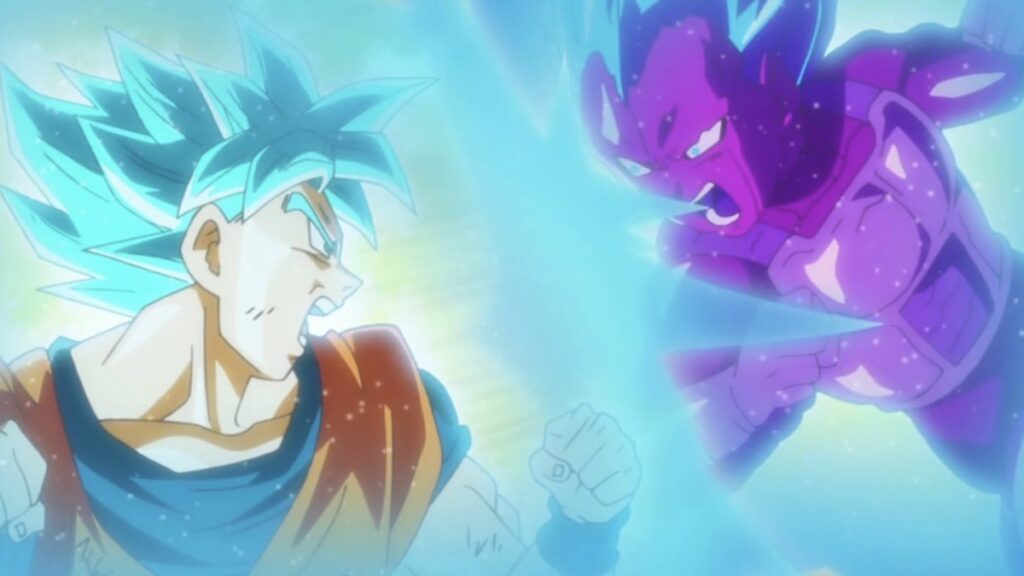
A shonen finale is engineered to be the biggest thing that has ever happened. Years of setup, a maximum-scale threat, every character present, the highest possible stakes. And a quiet film about two teenagers who cannot quite reach each other will outlast most of them in your memory.
That gap is worth taking seriously rather than treating as a matter of taste, because there is a mechanical reason for it.
Escalation eventually stops working on you
The problem with a story built on rising stakes is that the audience adapts.
The first time a series threatens a city, that lands. The second time it has to be a country. Then a planet, then a timeline, then existence itself. Each step produces a smaller response than the last, because the mechanism being used is contrast, and contrast requires a stable baseline. Once everything is enormous, nothing is.
By the time a long shonen reaches its finale, it has usually spent most of its available contrast. The final battle is technically the largest event in the series and often produces less feeling than a mid-series fight that had something specific at stake.
This is not a failure of writing. It is arithmetic. Escalation is a resource that depletes.
What slice of life is doing instead
Slice of life runs on the opposite mechanism. Rather than raising the stakes, it lowers the distance.
The events are small enough that you can map them directly onto your own life. Someone fails to say something they meant to say. Someone realises too late that a period of their life has ended. Two people miss each other by a day. None of this requires setup, because you brought the setup with you.
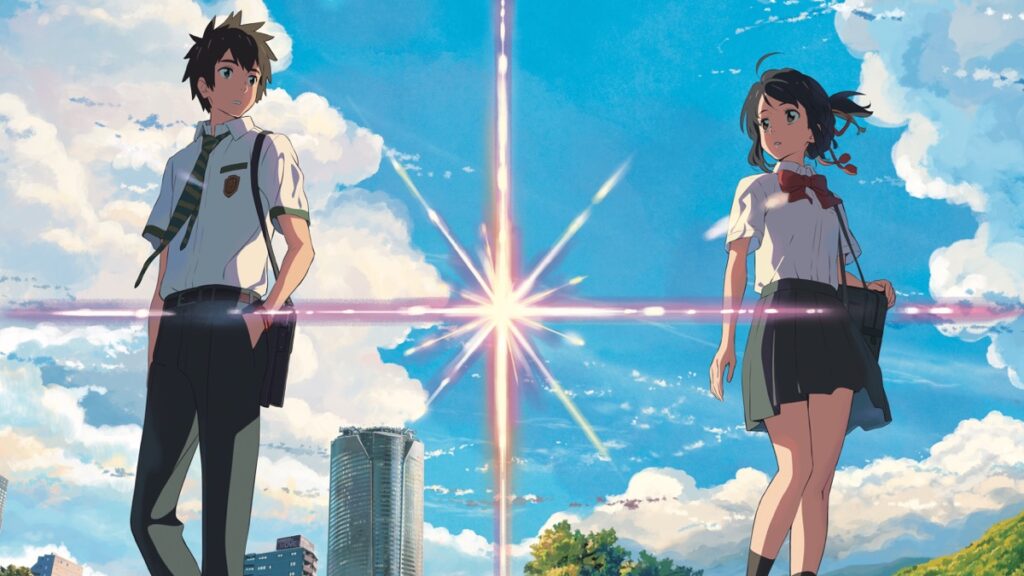
Your Name is the obvious example and it works because of a structural choice that gets less attention than the visuals. For most of its length it is a comedy about two people swapping bodies and being irritated with each other. The film spends a long time being light, and it is that lightness that makes the turn land. You are not braced.
Compare that to a shonen finale, where you have been braced for two hundred episodes. Anticipation is not the same as impact, and long-running series generate enormous anticipation and then have to satisfy it, which is a much harder problem than surprising someone.
The specific advantage of not needing history
There is a practical dimension here that gets overlooked.
A shonen finale only works on people who did the reading. Its emotional payload is entirely dependent on hundreds of hours of accumulated familiarity, which means the audience who can feel it is small and the experience is not transferable. You cannot show someone the last episode of a long series and expect anything.
A slice of life film is self-contained. Its emotional payload is available to anyone who has ever been a person. That is a much larger audience and a much more durable piece of work, because it does not depend on infrastructure the viewer has to build first.
This is also why these films travel internationally in a way most series do not. The barrier to entry is zero.
Where slice of life fails
It has its own failure mode and it is severe.
Because the events are ordinary, the execution carries everything. A shonen fight with mediocre direction is still a fight and still delivers something. A quiet scene with mediocre direction is just two people talking, and there is nothing underneath it to catch the fall.
The genre is therefore extremely top-heavy. The best examples are among the best work in the medium and the median example is inert. There is very little middle ground, because the margin for error is almost nothing.
The second failure is sentimentality. The distance between an emotional moment that has been earned and one that is being manufactured is small, and audiences detect manufacture instantly. A film that tells you how to feel about a small event has lost, whereas a shonen finale can be somewhat manipulative and get away with it because the spectacle covers for it.
The series that get this right within shonen
The interesting cases are the long-running series that periodically use the slice of life mechanism inside an escalating structure.
The best moments in most long shonen are not the largest fights. They are the quiet ones placed next to large ones: a conversation before a battle, a small domestic scene in the middle of a war, a character doing something ordinary for the last time. Those moments work by the same principle as slice of life, and they work harder because of the contrast with everything around them.
Which suggests the two modes are not really in competition. The escalating structure is what makes the quiet moment land, and the quiet moment is what makes the escalation mean anything. Series that only escalate exhaust themselves. Series that only sit still have nothing to sit still against.
Why the finale specifically is the hardest place to do this
A finale has to be both the largest event and the most meaningful one, and those requirements pull in opposite directions.
Largest means maximum scale, which means minimum specificity, because scale forces you to abstract. Most meaningful means maximum specificity, because meaning lives in particulars.
The finales that succeed usually resolve this by ending small after being large: the battle concludes and then the story spends its final stretch on something quiet and personal. The ones that fail end at maximum volume and leave the audience with spectacle where the feeling should be.
That is the actual craft problem, and it explains why so many otherwise excellent series stumble in exactly the same place.
The thing I am not sure about
Whether the slice of life advantage is real or whether it is a recency and format effect.
A two-hour film is a fundamentally different object from a two-hundred-episode series, and comparing their emotional peaks may be unfair in a way I have not fully accounted for. A film can be constructed as a single deliberate shape. A long series is built under deadline over years by people who did not know how it would end.
Under that reading, the comparison is not slice of life versus shonen at all. It is planned versus improvised, and the genre difference is incidental.
I find that argument fairly convincing and I have not been able to decide how much of the effect it explains.