Quidditch is decided by a ball the size of a large walnut, worth 150 points, and the match ends the second it is caught. The three Chasers, the Keeper and the two Beaters on each side are playing for the scoreline. Oliver Wood explains all of it in one evening in chapter 10, and the rules hold together better than three films ever let on.
Harry gets the explanation after dark on the pitch, holding each ball in turn. He summarises it in one line and gets it right: three Chasers score, the Keeper guards the hoops, the Beaters keep the Bludgers away.
Four balls, seven players, ten points a goal
| Ball | Size and material | What it does | Worth |
|---|---|---|---|
| Quaffle | red, about the size of a football | thrown between the Chasers and through one of the hoops | 10 points a goal |
| Bludger, two of them | jet black iron, slightly smaller than a Quaffle | rockets around trying to knock players off their brooms | nothing |
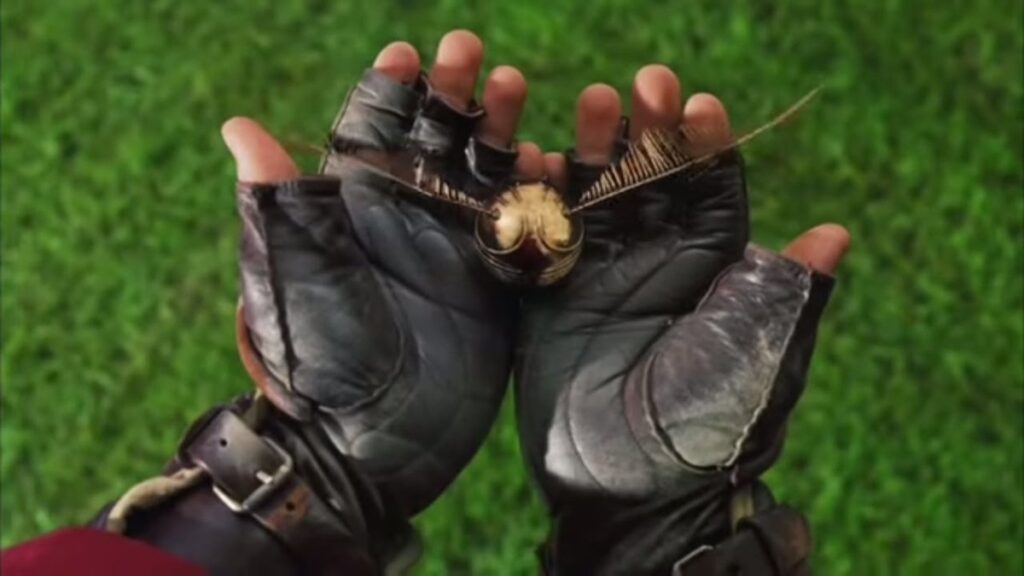
| Golden Snitch | about the size of a large walnut, gold, with fluttering silver wings | caught by the Seeker, and the match stops | 150 points |
Wood’s count is exact: “There are seven players on each side. Three of them are called Chasers.” Add a Keeper, two Beaters and a Seeker and the seven are accounted for. Fifteen brooms rise at the start of the match in chapter 11, because that is fourteen players plus Madam Hooch with her whistle.
The detail that dates the book is Harry’s attempt at a comparison. He calls it basketball on broomsticks with six hoops. Wood asks him what basketball is, and then, minutes later, pulls a bag of Muggle golf balls out of his pocket to use as practice Snitches. The Keeper of the Gryffindor team has never heard of the sport and owns its equipment.
150 points is fifteen goals
That single number is the whole argument about the game. A Seeker who catches the Snitch has scored the equivalent of fifteen goals, so a side that loses the goals 20 to 60 can still win by 110. Which is what happened in Harry’s first match: Gryffindor 170, Slytherin 60, with the Snitch doing almost all of it.
The Lexicon makes the case for the rest of the pitch. House and league standings count total accumulated points rather than wins and losses, so every goal keeps its value even when the Snitch decides the result. That is also why Seekers get fouled so much, since conceding a ten-point penalty shot is cheaper than losing the 150.
It explains the strangest passage in the chapter too. Wood says a match only ends when the Snitch is caught, and that the record is three months, with substitutes brought on so players could get some sleep. The Lexicon points out that the official rulebook allows no substitution for injury, so Wood’s anecdote sits slightly outside the rules he is teaching.
The Beaters are the part nobody remembers
Two players a side do nothing but defend. Wood calls them the team’s protection from the Bludgers, and the twins are his answer to both, since, in his words, they are “like a pair of human Bludgers themselves”. A game with two iron balls hunting the players is a game where half the side is there to take hits, and no film scene makes that clear in so many words.
The film rebuilds the pitch
Wikipedia’s article on the 2001 film records one structural change to the sport itself: the pitch is altered from a traditional stadium to an open field circled by spectator towers. The rules survive intact, and the first match keeps the broom jinx and the catch.
The stands are where the book puts its best small moments. Hermione sets Snape’s robes alight from the row behind him. Dean Thomas shouts for a referee to send Flint off with a red card and Ron has to explain that Quidditch has no red cards. An open field with towers keeps the crowd and loses the tightness that makes those two jokes possible, because neither needs a tower. Both need a row of seats close enough to touch.
What the rules actually test
A first match is the hardest exposition a series has to carry. Seven players, four balls, two kinds of scoring and one rule that ends everything, all while three hundred people are moving fast. The 2001 film solved it by cutting Wood’s lesson down to the minimum and letting the match teach the rest.
The book’s version is longer and cleaner. Wood explains, Harry repeats it back, and the reader learns the sport in the same order a player would. On 25 December 2026 the show gets one shot at that scene, and the test is simple: if the audience cannot say what the Snitch is worth by the end of the first match, the match had no stakes.
More Harry Potter posts sit under Movies and TV.
Image: the Golden Snitch cupped in Harry’s gloved hands, from the official WizardingWorld clip of the first match.
Also read: The Hogwarts Feast Clip Adds a Chant the 2001 Film Never Had
Also read: The Harry Potter Show Has to Beat a Memory, Not the Films