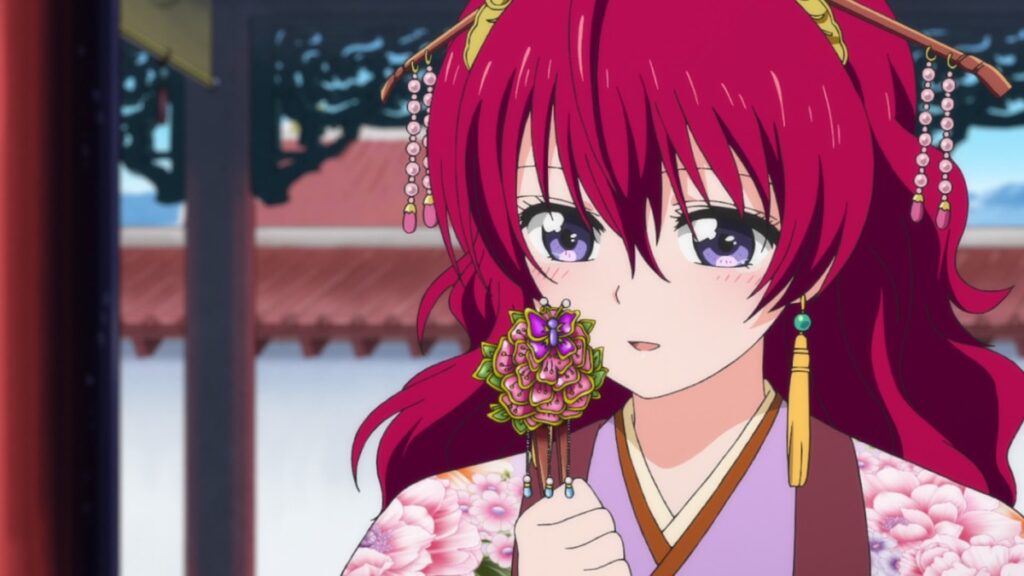
Yona of the Dawn has a studio for its sequel. The anime’s official X account confirmed that Pierrot Films, the newer brand under Studio Pierrot, will handle animation on the follow-up to the 2014 series. No release window, no staff list and no cast have been announced.
The announcement was reported by CBR on 21 October 2026, about ten months after the sequel itself was confirmed in December 2025. Between those two dates the project was a name and nothing else. A studio is the first piece of information that tells you what kind of show it will be.
What is confirmed for the Yona of the Dawn sequel
Pierrot Films produces the animation, following a December 2025 confirmation that a sequel existed at all. Everything a viewer plans around is still open: when it airs, who directs it, and whether the original cast returns.
| Detail | Status |
|---|---|
| Sequel confirmed | Yes, December 2025 |
| Animation studio | Pierrot Films, announced October 2026 |
| Release window | Not announced |
| Director and staff | Not announced |
| Cast | Not announced |
| Source material | Mizuho Kusanagi’s manga, serialised from August 2009 |
Why the studio is the real news
Studio Pierrot spent decades as a weekly production house. It made Naruto and Bleach on continuous schedules. Its own staff have said publicly that the studio was not built to deliver the animation Jujutsu Kaisen or Demon Slayer turn in. Weekly shows leave no room for it.
Pierrot Films was created to answer that. It is a separate brand for shorter, seasonal productions, and its first job was the third cour of Bleach: Thousand-Year Blood War, which drew praise for both animation and pacing. The current season of Black Clover is the other title on its list.
With Yona on that list, the sequel stops being a nostalgia commission. A 2014 show made on a weekly schedule gets a follow-up from the studio brand built for seasonal quality. That is an upgrade, and it matters more than any cast rumour.
What Yona of the Dawn is
The manga is Mizuho Kusanagi’s, launched in Hakusensha’s Hana to Yume in August 2009 and serialised for more than fifteen years, ending last year with 48 volumes collected. The story follows Princess Yona, who flees her kingdom after her father is murdered by the cousin she grew up with. She travels to find four legendary dragon warriors with her bodyguard Hak.
The anime adaptation ran 24 episodes from October 2014 to March 2015 and is streaming on Crunchyroll. It covered a fraction of the manga, which is why the sequel announcement landed the way it did. Sixteen years of story with 24 episodes of animation is a gap fans noticed every season.
Sequels to finished manga are the cheaper bet
Sequels to a decade-old series are no longer unusual. Studios that spent the 2000s on endless weekly runs have spent the 2020s returning to finished properties with a shorter, denser season. It costs less than a new franchise, it arrives with an audience that already wants it, and the source material is finished, which removes the risk of the anime overtaking the manga.
Yona is an unusually clean version of that bet. The manga is complete, the fandom is documented, and the studio has a reason to make it look good. Pierrot Films is still building a reputation, and a flagship sequel is the cheapest way to build one. Pierrot Films is not the only studio working this out. MAPPA’s president made the same point about the international audience at AniMagiC in Germany: it influences the studio, and the team is careful about how far that goes.
Why the sequel only happened after the manga ended
The manga finished last year, after more than fifteen years of serialisation. That timing is not a coincidence. A studio adapting a running manga has to choose between waiting for chapters and inventing an ending, and Yona spent a decade in exactly that position. Once the final chapter was published, the sequel became a production with a known destination.
It also removes the worst outcome for a returning viewer, which is a second season that overtakes its source and stalls. Whatever this sequel covers, there is a finished book behind it.
The director is the next real signal
The director is the next real signal. A studio name tells you what the animation can be. A director and a series composition credit tell you whether the sequel will follow the manga closely or compress it, and that decision shapes everything a returning viewer cares about.
After that, a release window. Until a director is named, the honest answer to “when is Yona of the Dawn coming back” is that nobody outside the production knows. Demon Slayer’s Infinity Castle Part 2 has no date either, and that is the biggest franchise in anime right now.
Demon Slayer is the clearest recent case of what production quality does to a story, and the logic holds here: a studio with time produces a different show from a studio without it. More anime arguments sit in Anime.
Pingback: What the MAPPA International Audience Actually Changes - Siddharth Vira