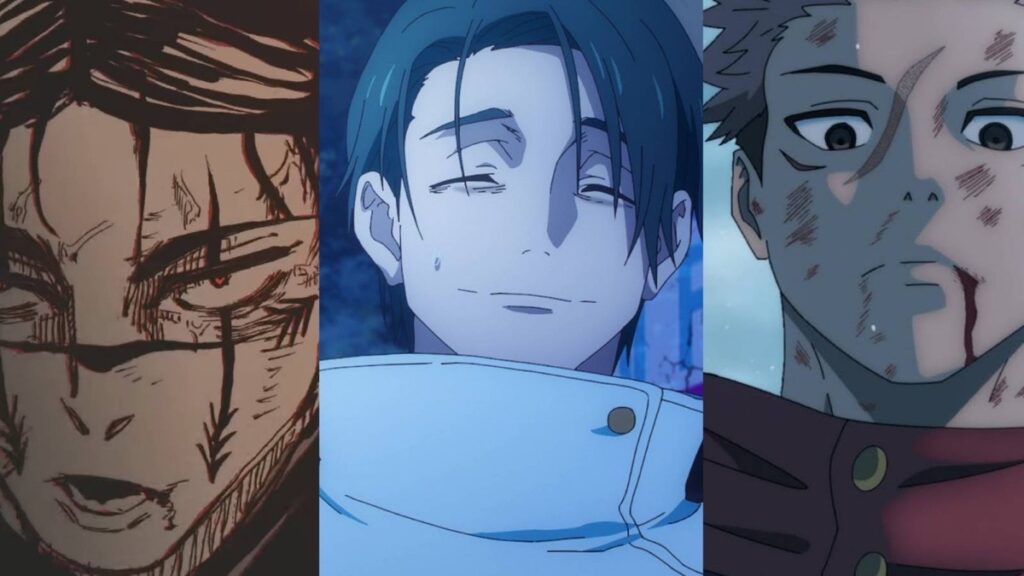
MAPPA’s president and CEO Manabu Otsuka gave an interview to Anime Corner at the AniMagiC event in Germany, and one answer has travelled further than the rest. The international audience influences the studio, he said. The team is careful not to let that influence go too far, because bending can mean handing over the particular appeal that makes Japanese anime strong. CBR reported the interview on 25 October 2026.
The studio is 15 years old this year, so the quote arrived at a convenient moment. It is also a statement that costs nothing to make and is hard to check. The useful test sits in the slate he is shipping this season.
Otsuka describes a filter and never names what it rejected
The reason he gives is selection rather than refusal. He described looking level-headedly at what the international market can teach and what Japanese anime must keep, then examining and choosing rather than absorbing everything. That is a description of a filter, and a filter only means something if you can name what it rejected.
He did not name anything it rejected. What he did name is a principle: anime’s distinct appeal is worth protecting even when protecting it costs overseas reach. Take that at face value and the risk he describes is real, because the money is not neutral. A studio whose growth depends on global streaming revenue has an incentive to smooth out the things that make its output strange.
Why the studio can afford to say no
MAPPA was founded in June 2011 by Masao Maruyama, who had already built Madhouse. Fifteen years later it runs from Tokyo’s Nakano ward and the Tohoku region. The second location is how the studio recruits animators from outside the Tokyo pipeline, which is a production decision before it is a creative one.
The catalogue explains the confidence. Yuri on Ice and Banana Fish sit in the same filmography as Jujutsu Kaisen and Chainsaw Man, which is a range few studios have managed. A studio with that range is less dependent on any single overseas trend, because it is not selling one kind of show.
The 3 questions are the ones the interview answers directly, and each one has a way to test it against the slate.
| Question | What MAPPA says | What to watch to test it |
|---|---|---|
| Who decides the creative brief? | The studio, with international input filtered rather than absorbed | Whether the Fall 2026 originals look like the sequels |
| Does an adaptation change for overseas viewers? | No. Kaori Makita says fans receive the work the same way in any country | Whether Ranma 1/2 season 3 softens its 1980s comedy |
| What does the overseas market get? | Influence on production scale and demand, not on story | Whether new IPs get the same episode counts as the hits |
Adaptations do not change for overseas viewers
Kaori Makita, who directed Hell’s Paradise, added the part of the interview that is easiest to check. She said that domestic and international audiences gravitate to popular adaptations for the same reasons, so there is no need for alternate approaches when adapting an existing manga. Her framing is that the focus is on realising the source well enough that existing fans and new viewers can enjoy it equally.
That is a defensible position and it matches what happens. A viewer in India watching Jujutsu Kaisen is not watching a different show from a viewer in Osaka. The localisation happens in subtitles and dubs, which sit outside the production. Studios drift on original projects rather than on adaptations. An original built for a global chart from the first pitch is easy to spot, because the setting goes international and the stakes go generic.
A 15th year gets 3 sequels and 2 originals
The Fall 2026 slate is Ranma 1/2 season 3, Jujutsu Kaisen: The Culling Game Part 2, Chainsaw Man: International Assassins Arc, and two new titles, Fall in Love and You False Angels. Three sequels and two new IPs is a safe slate for a 15th year, and safe slates are a business decision rather than a creative one.
Studios finance risk with certainty, and a studio that has just spent a decade building three franchises has every reason to harvest them. It does mean the test of Otsuka’s principle sits in the two new titles rather than the sequels. A studio that protects anime’s distinct appeal has to spend money on the strange ones.
The industry context makes this sharper. Viewers notice immediately when a franchise moves between houses. The Yona of the Dawn sequel moving to Pierrot is this month’s example of how much a production decision reads on screen. Continuity of studio is now part of how a show is judged before anyone sees a frame.
More anime arguments sit in Anime.
What this means for a viewer outside Japan
The overseas audience has real influence on volume and release speed, and almost none on story. The complaints that travel best are about scheduling, dubs and episode counts. The complaints that do not travel are about writing. A studio’s stated principle is worth checking against its next original, not its next sequel.
There is a reason to want Otsuka to be telling the truth. Anime made for a global algorithm tends to arrive with the same three settings. A city that could be anywhere, stakes measured in the world ending, and a protagonist with no local habits. Animation can carry a weak script for a season, and it cannot carry a story that was sanded down before it was drawn.
I would want one MAPPA original from the last five years that could only have been made in Japan. If that exists, the principle is holding. If it does not, the sequels are doing all the work and the quote is decoration.
Source: CBR’s report of 25 October 2026 on the Anime Corner interview with Manabu Otsuka and Kaori Makita at AniMagiC in Germany.


Pingback: Yona of the Dawn's Sequel Goes to Pierrot Films, the Studio Built for It - Siddharth Vira