Both wands carry a single tail feather from the same phoenix, Fawkes. Two wands that share a core are brothers, and brother wands will not work against each other. When their owners force them to fight, one wand makes the other give up its last spells backwards. That is the whole mechanism, and it is set out in chapters 34 and 36 of Goblet of Fire.
Two wands, one bird
| Wand | Core | Where the book says so |
|---|---|---|
| Harry Potter, holly, 11 inches, supple | one phoenix tail feather | chapter 5, Philosopher’s Stone |
| Tom Riddle, yew, 13 and a half inches | one phoenix tail feather, from the same bird | chapter 36, Goblet of Fire |
Ollivander gives Harry the first half of this in chapter 5 of Philosopher’s Stone, and Harry is eleven and does not follow it. “It so happens that the phoenix whose tail feather is in your wand, gave another feather.” Ollivander calls the second wand the brother of Harry’s, and adds that the brother gave Harry his scar. Six years later, in chapter 36 of Goblet of Fire, Dumbledore names the bird. “Harry’s wand and Voldemort’s wand share cores. Each of them contains a feather from the tail of the same phoenix.”
What brother wands do instead of winning
Dumbledore answers the next question before Harry asks it. “They will not work properly against each other.” Force the two of them, and the wands do something else. One wand makes the other repeat the spells it has cast, starting with the most recent and running backwards.
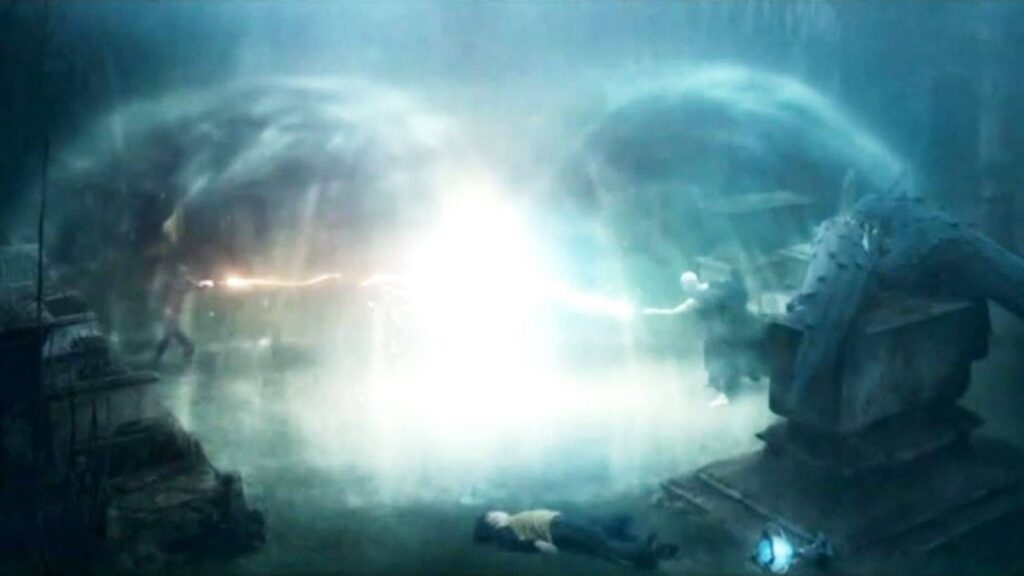
The effect has a name. Chapter 34 of Goblet of Fire is titled Priori Incantatem, and the chapter is the scene. It happens in the graveyard, where Harry’s Disarming Charm meets the Killing Curse and neither spell lands. “A narrow beam of light connected the two wands, neither red nor green, but bright, deep gold.” The chapter then gives a thousand more beams, a golden dome around the two of them, and a sound Harry has heard only once before in his life: phoenix song.
Priori Incantatem is not the same as the spell on its own. A single wand will repeat its last spell for anyone who asks, and chapter 9 of Goblet of Fire is where that happens, when Amos Diggory points Harry’s wand at the sky to see what it did last. The reverse effect needs two wands with the same core and a fight between them.
Five people come out of Voldemort’s wand
The reverse spell walks back through the last killings that wand did, and each killing comes out as the person it killed. Chapter 34 names five of them, Cedric Diggory, Frank Bryce, Bertha Jorkins, James Potter and Lily Potter. Dumbledore is careful about what they are in chapter 36 and calls them shadows rather than ghosts. They stand between Harry and Voldemort long enough for Harry to reach the Triwizard Cup and get out of the graveyard.
Why the two wands met again three years later
Voldemort does not walk into the same trap twice. In chapter 4 of Deathly Hallows he hunts Harry with Lucius Malfoy’s wand so the twin cores cannot meet. Harry’s holly wand fires on its own anyway, throws out gold light and breaks Lucius’s wand in the air. Chapter 35 has Dumbledore explain it. “The cores reacted in a way that Lord Voldemort, who never knew that your wand was a twin of his, had never expected. He was more afraid than you were that night, Harry.”
So the wand recognised its brother’s magic before Harry did, which is the closest the books come to giving a wand a memory of its own. The same idea decides the last fight in the series, where the wand in a man’s hand matters more than the spell he says, and the Harry Potter posts that follow this one sit in the Movies and TV hub.
What the 2005 film shows
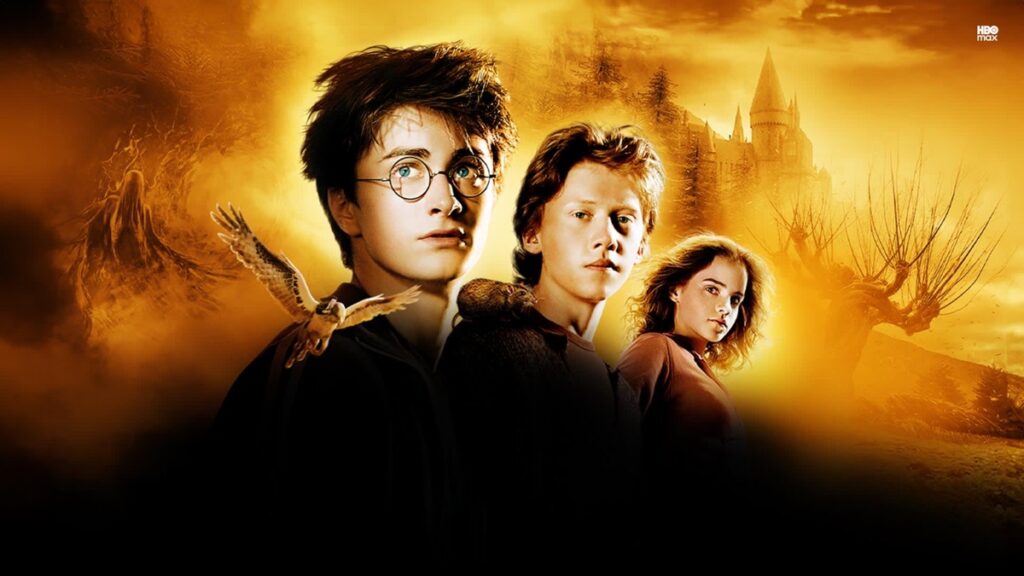
The film keeps the graveyard, the dome of light and the thread running between the two wands, and it lets the shapes come out of Voldemort’s wand. The book names five of them in chapter 34, Frank Bryce and Bertha Jorkins among them.
Voldemort’s answer to the twin cores is to go looking for a wand that has never lost a duel. He finds one in the next book. It does not belong to him, and the reason is a rule about wands that chapter 36 of Deathly Hallows spells out in one line.
Image: the graveyard duel in the 2005 film, Warner Bros., via ScreenRant.