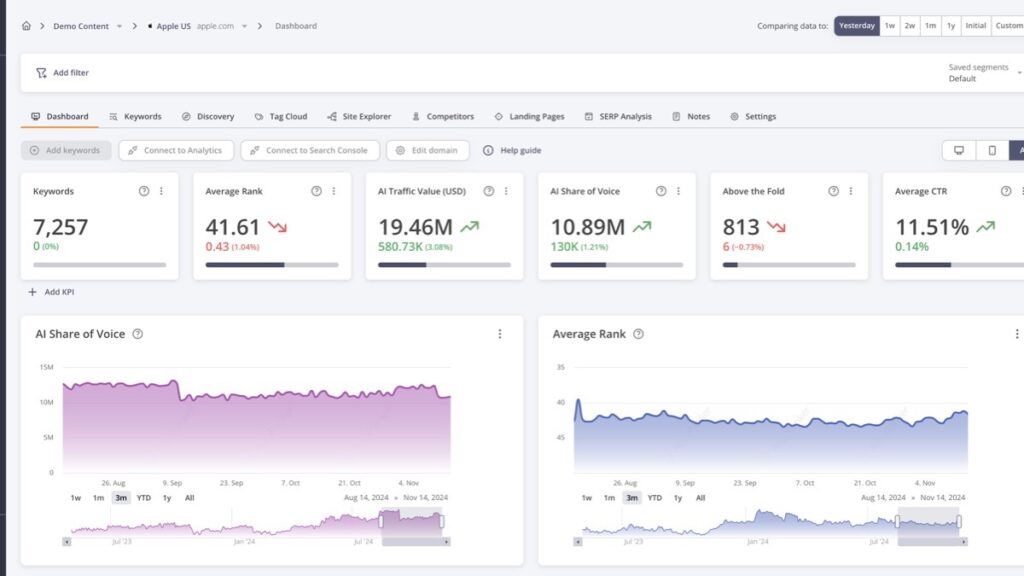
Five rank tracking companies have now published how they handle the suspect Google results that have been hitting their data since September 2026. Their rules are different enough to change what a client report says. Search Engine Journal put the statements side by side on 23 October 2026. If you report rankings for a living, that comparison is worth reading before you send September or October numbers anywhere.
The short version is that none of the five describes the same check, none says Google told them anything, and none has published independent testing of its own filter. That does not make them wrong. It makes their numbers a set of estimates with different error bars.
What actually went wrong with the results pages
Google has been returning pages to some rank trackers with many or all of the usual sites missing, which the industry started calling poisoning. Nozzle published research on 10 October and updated it on 21 October. Its test counts a first page as poisoned when less than half of the keyword’s normal first page sites appear anywhere in the collected results. By that test, 8.7% of first pages were poisoned between 13 September and 21 October, against 0.17% between 20 August and 9 September.
Nozzle’s own conclusion is that this is Google’s response to AI scraping and that rank trackers are caught in the middle. Google has not said anything publicly that any of the vendors quoted.
What each vendor does before storing a rank
The comparison that matters is what happens between Google returning a page and the number appearing in your dashboard. Three of the five throw a suspect page away and fetch it again. One buys redundancy instead of verification, and one sells raw results with the checking left to the buyer.
| Vendor | Check before storing | What it says is affected |
|---|---|---|
| AccuRanker | Discards shortened pages, re-fetches in another browser session, and compares page one with the sites seen on at least two of the previous three days. Repeats the fetch when less than half return. | About 1 in 20 desktop pages and 1 in 12 mobile pages lack the history needed to run the check |
| SEOmonitor | From 13 October, checks each result against the keyword’s own recent history as results arrive | Roughly 8% of results returned each day are incomplete or incorrect |
| Ahrefs | Filters that detect and reject abnormal results, then request replacements | 5% to 20% of results over the past few weeks, varying by data provider |
| BrightLocal | No per-result verification described. Adding extra data suppliers so one failing provider is not fatal | Its CEO says there is no single fix that solves it completely |
| SerpApi | Deployed an update on 14 October intended to reduce how often poisoned results come back, and is still working on it | Does not give a figure |
Source: statements from each company as compiled by Search Engine Journal on 23 October 2026.
The part that silently changes your report
SEOmonitor says that for unusually large drops on the same device, it may keep showing the previous rank for up to two daily updates. That buys time to work out whether the lower position is real. That is a sensible product decision, and it has a consequence nobody mentions. A client dashboard that shows no change for two days may be holding the previous number while the tool decides.
Ahrefs said it is cleaning up past results that may have been affected, without saying which dates, reports or metrics the cleanup covers. So an export taken in October may not match the same period pulled in November, and nobody outside Ahrefs can tell you which one is right.
How to check a September or October drop before you report it
The order below is the one I would use, and it takes about twenty minutes per client.
- Ask the vendor whether the stored data for those dates was rewritten. Not whether the tool is now fixed. Whether the specific dates you are about to report were reprocessed. SEOmonitor reprocessed keywords for 25 to 28 September and again from 9 to 13 October, and another vendor may have done nothing.
- Re-pull the keyword and compare it with its own page one from two of the previous three days. This is the AccuRanker test done by hand, and it catches the case where a page came back with half the usual sites missing.
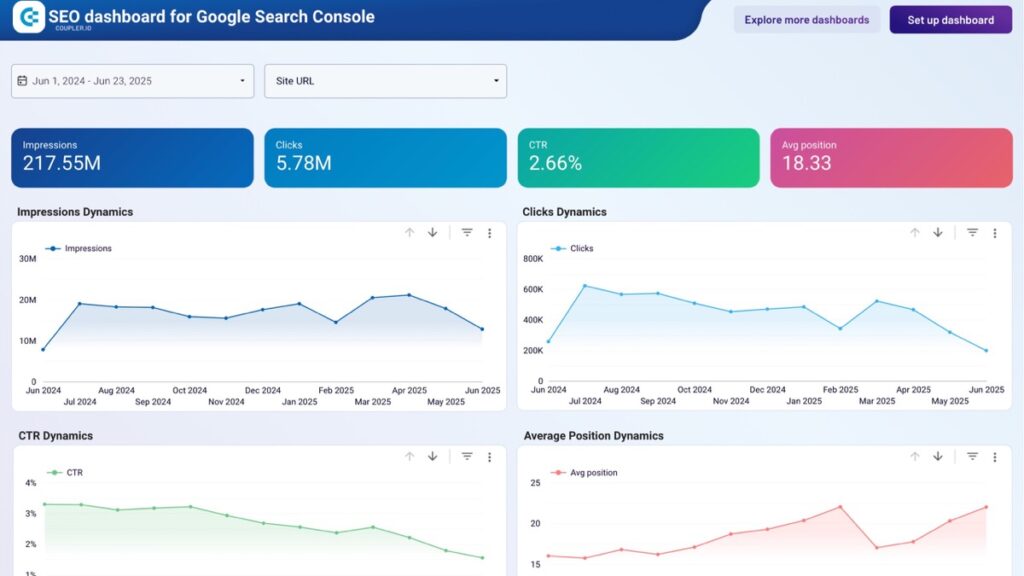
- Pull the same period in Search Console. Use impressions and clicks rather than average position. Average position is the mean position of your highest ranking result per query, and it moves for reasons that have nothing to do with your page.
- Compare two exports of the same period if you have them. If an old export and a new one disagree, the new one reflects the reprocessing and the old one should not go to a client.
- Ask what the tool does at the API layer if you pull data yourself. SerpApi’s own customers asked for a flag for searches without relevant results, which tells you the checking is still being pushed downstream.
The mistake I see coming
The obvious mistake is presenting a September drop as fact. The less obvious one is presenting October stability as fact, because a tool holding a suspect number for two days looks exactly like a ranking that did not move.
There is a wider version of the same problem. Most SEO tests cannot fail, which is why they prove nothing, and a ranking report built on a single unverified pull is in that category. It has no way of being wrong out loud. Query fan-out already spread one keyword across many results pages, and now the page you collect is not always the page a person gets.
The thing I would push back on
If the trackers were the only source of truth, this would be a crisis. They are not. Search Console is first-party data from the system doing the ranking. It does not pass through a scraper, and it covers every query where your site appeared rather than a list you chose. Any client conversation about a drop should start there and use the tracker for competitor context.
What I would not do is stop tracking ranks. A tool with a known 5% to 20% error rate on an affected week is still better than a hunch, as long as the report says which week is affected and which numbers were reprocessed. The failure happens when a number gets sent with no check behind it.





Pingback: Google Business Profile: Five Rules Indian Businesses Break - Siddharth Vira