If you have been publishing decent blog content and never see yourself referenced in ChatGPT, Perplexity or Google’s AI Overviews, the problem is usually not quality. It is that your content is hard to extract, hard to verify, and indistinguishable from forty other pages saying the same thing.
Traditional SEO gets you ranked. AI search gets you cited. Those are different outcomes with different requirements, and a page can do one without the other.
Start with the part most people get wrong
There is a widespread belief that you should write a separate version of your content for AI systems. Chunked into small fragments, stuffed with your target phrase, structured for machine parsing.
Google’s own guidance on AI features says the opposite, explicitly. Do not break content into small pieces for AI. Do not write separate content for AI. Their reasoning is that AI Overviews and AI Mode run on core Search ranking systems, so the same quality signals apply, and producing AI-targeted variants risks tripping the scaled content abuse policy.
The Princeton research on generative engine optimisation found something sharper. Keyword stuffing does not just fail to help in AI search. It reduced visibility by roughly ten percent. In traditional SEO, stuffing is merely ineffective. In AI search it is actively negative.
So the first thing to stop doing is the thing a lot of people are currently being sold.
Why your page is not getting picked
An AI system pulling sources for an answer is doing something closer to research than to ranking. It needs to find a passage that answers the question, confirm the source looks credible, and prefer material it can attribute.
Four things usually block this.
The answer is not in the page, it is spread across the page. If someone has to read eight paragraphs to assemble your answer, so does the model, and it will take the page where the answer sits in one place instead.
There is nothing specific to cite. Pages that make general claims get skipped in favour of pages with numbers, dates, named examples and first-hand detail. This is the single biggest differentiator I see.
There is no author and no date. Undated, unattributed content is a named underperformer for AI citation. Systems weight recency and provenance heavily, and an anonymous page with no timestamp fails both.
You are one page chasing one keyword. This is the structural one, and it is worth its own section.
Query fan-out changes what a content plan should look like
Google’s AI features do not just answer the query someone typed. They generate a set of related queries behind the scenes, retrieve results for each, and synthesise across all of them. Google’s own example is that a question about fixing lawns fans out into queries about herbicides, chemical-free removal and weed prevention.
The implication is significant. One page targeting one keyword is now a weak unit. The thing that gets retrieved repeatedly is a body of content that covers a topic and its adjacent questions.
Practically, that means when you plan a piece, spend ten minutes listing the five to ten questions an AI would plausibly fan out to from your target query, and make sure your site covers them. Not one page stuffed with all of them. A cluster.
This is also why the old long-tail strategy of one thin page per keyword variant has stopped working. The systems understand synonyms and semantic equivalence. They are not matching strings.
The content types that actually get cited
Not all formats are equally citable, and the distribution is lopsided.
Comparison content takes roughly a third of all AI citations, which makes sense: it is structured, it covers multiple entities, and it tends to be balanced. Definitive guides take around fifteen percent. Original research and data around twelve. Best-of lists and opinion or analysis pieces sit around ten each.
The underperformers are generic blog posts with no structure, thin pages, anything gated, anything undated, and PDF-only content.
If you write one thing this quarter with citation in mind, make it a comparison piece on something you have direct experience of. That combination sits in the highest-citation format and the highest-trust signal at the same time.
The first-hand experience point is not a platitude
Everyone repeats the E-E-A-T acronym and most people treat the first E, experience, as decorative. It is the most mechanically useful part.
The reason is simple. A model assembling an answer from six sources that all say the same generic thing has no reason to pick yours. A source that says something the others cannot say, because it comes from having actually done the thing, is the one that gets pulled in.
Concretely: name the tool you used, the number you saw, the month it happened, the thing that went wrong. Not because it performs credibility, but because specific claims are citable and general ones are not.
There is a related finding worth sitting with. Brands are considerably more likely to be cited through third-party sources than through their own domain. Your own site is not the only lever, and often not the strongest one. Genuine participation in the places that get cited heavily, including Reddit and industry publications, does more than another blog post. Genuine being the operative word, since bulk-spamming those places to manufacture citations is both obvious and against the platform rules.
The technical thing to check before anything else
Open your robots.txt right now and confirm you are not blocking GPTBot, PerplexityBot or ClaudeBot.
A surprising number of sites blocked these during the wave of AI-crawler anxiety a couple of years ago and never revisited it. If those agents are blocked, those platforms cannot cite you regardless of how good your content is. There is a reasonable argument for blocking training-only crawlers if you object to that use. There is no argument for blocking the search-and-cite crawlers while also wanting to appear in AI answers.
Also worth checking: whether your main content renders without JavaScript. If it does not, both core Search and AI agents may be seeing an empty page.
How to know whether any of this is working
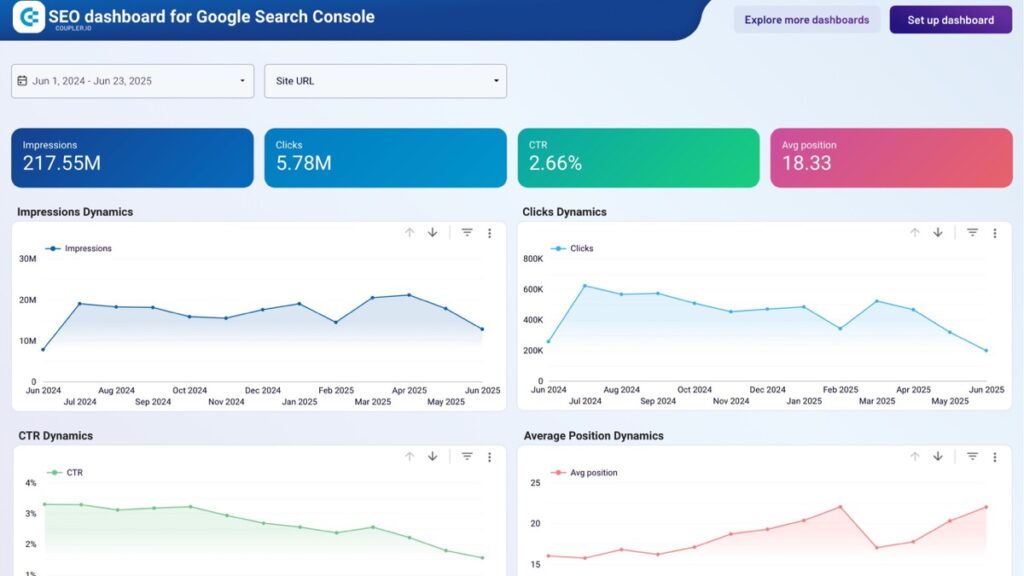
Google has been clear that there is no AI-specific reporting in Search Console. AI Overviews use core Search ranking, so standard Search Console metrics are what you have on the Google side.
For everything else, the low-effort approach costs nothing. Pick your twenty most important queries. Once a month, run each through ChatGPT, Perplexity and Google. Record whether you were cited, who was, and which page of theirs got pulled. Log it in a spreadsheet.
Three months of that will tell you more about your actual position than any tool, because you will start seeing which specific pages of your competitors keep getting selected, and what those pages have that yours do not.
The uncomfortable summary
Most of what makes content citable by AI is the same thing that made it good before: cover the topic properly, say something only you can say, be specific, show who wrote it and when, and organise it so a reader can find the answer.
The genuinely new parts are narrow. Plan in clusters rather than single keywords because of fan-out. Prioritise comparison formats. Check your robots.txt. Stop stuffing, because it now costs you rather than merely wasting your time.
Anyone selling you a more complicated system than that is selling you something.