The same non-brand B2B search click cost about 21 per cent more in the six months to September 2026 than in the same months of 2025. That figure comes from 1,349 keywords tracked across 14 advertisers, and it is the version of the number you get after removing the advertiser’s own budget, ad position and Quality Score changes.
Grey Matter published the study as Same Click, Higher Price in October 2026, and Search Engine Journal reported it on 15 November 2026. The useful part is not the 21 per cent. It is the method, which holds the keyword constant and then peels off the parts the advertiser chose.
The Same Keyword Costs 21% More After 3 Controls
The headline number took three steps to reach. Before any adjustment, keywords bought in both years cost 29 per cent more. Adding budget changes dropped it to 22 per cent. Adding position and Quality Score brought it to 21 per cent.
| Model | Estimate | Likely range |
|---|---|---|
| Same keywords, no controls | +29% | +4% to +59% |
| Plus budget controls | +22% | +1% to +48% |
| Plus position and Quality Score | +21% | +1% to +44% |
| Main model without the biggest spender | +17% | -2% to +40% |
| Main model including broad match | +31% | +11% to +55% |
The biggest single adjustment is budget, worth about 7 points on its own. That is the part advertisers keep in their own hands and rarely separate from the market.
Spending More Raises Your Own Price for the Same Keyword
Every 10 per cent increase in campaign spend added about 1.4 per cent to the advertiser’s own cost per click, on top of the market move. Doubling a budget adds roughly 11 per cent from that alone.
The mechanism is automated bidding. A campaign on a strategy like Maximize Conversions spends a bigger budget by entering auctions it used to skip, which means higher positions, more competitive searches and pricier times of day. The keyword list does not change. The price paid for the same word does.
The extreme case in the sample nearly quadrupled its non-brand spend year over year, and its same keywords cost 132 per cent more. Its brand keywords, on a flat budget, rose about 4 per cent over the same period. Same advertiser, same market, two very different outcomes based on how the campaigns were funded.
The Honest Range Runs From 17% to 32%
Fourteen advertisers is a small sample, and the report says so. The main estimate of 21 per cent carries a likely range of plus 1 to plus 44 per cent. Remove the single biggest spender and the estimate falls to 17 per cent, with a range that crosses zero.
Then the report checks itself with other methods, and they land between 17 and 32 per cent. One advertiser that held its budget flat is the closest thing in the data to a pure market reading, and the same keywords cost it 20 per cent more. Reading the spend trend at flat spend gives 31 per cent, or 20 per cent once you drop the three advertisers with the fewest comparable keywords.
That spread is the honest answer to “how much more expensive did the same click get”. A flat paid search budget buys roughly one fifth fewer clicks a year, and the true figure could be lower or higher. Any deck that quotes a single percentage without the range is quoting the least useful version of the research.
The Method Works on Organic Reports Too
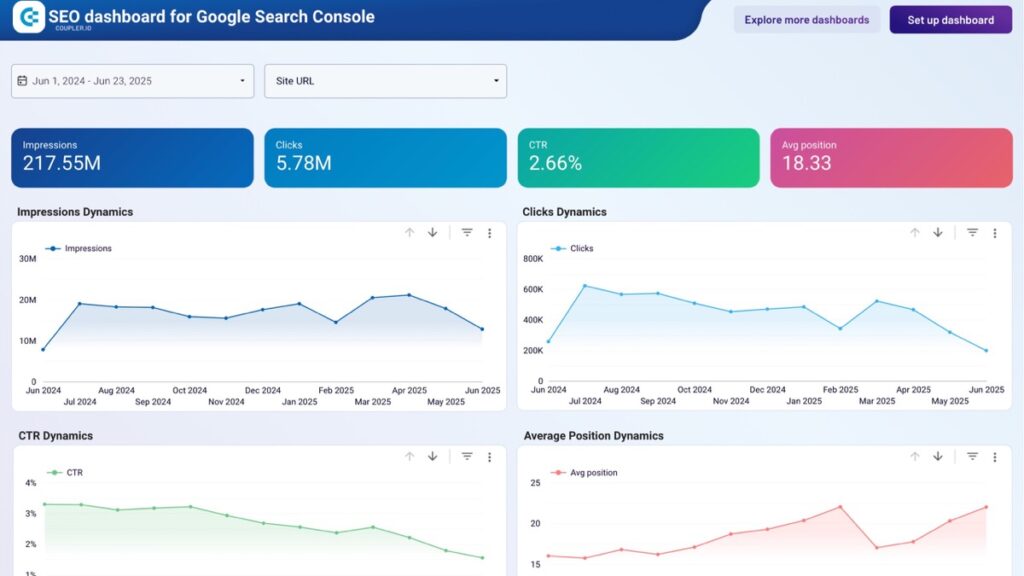
Holding the thing constant is the step most reports skip. On the paid side that means the same keyword in the same account. On the organic side it means the same query set on the same pages, which is not what a default Search Console comparison gives you.
So when traffic falls in the same week a core update rolls out, the first question is whether the queries changed, not whether Google changed. The four moves before comparing traffic after the November 2026 update start from that premise, and the new referrer values Google documented make the same point about where a visit came from rather than how many arrived.
The report’s authors pair it with an earlier study of their own, The Great Declick, which found B2B sites ranking on page one of Google getting far fewer organic clicks than a year earlier. Two studies, one conclusion that matters for planning. Both sides of search are getting more expensive at the same time, and the blog post that assumes organic will absorb the difference is planning on a rate that no longer holds.
What 14 Advertisers Cannot Tell You
The sample is 14 clients of one agency, all anonymised, with no industries or currency disclosed. The study covers Google Ads Search campaigns only, so Performance Max, Shopping and Display are outside it. There is no conversion rate or cost per lead data, which means the report cannot say whether the 21 per cent bought better results.
The authors are clear that it measures correlation rather than cause. Google Ads does not report historical budget settings or bid targets, so spend and lost impression share stand in for them. One honest reading is the one Search Engine Journal’s own April column made: under smart bidding, a rising cost per click can be the sign of an account doing more of what works.
There is also a second number worth holding beside this one. Alphabet’s own third-quarter filing reports cost per click for Search and other properties up 4 per cent year over year. That metric divides click-driven revenue by all paid clicks, so it moves with the mix of clicks bought. It measures something different from the price of the same keyword, and the gap between 4 and 21 is a reminder to check what a benchmark is counting before you act on it.
What to Log Before Your Next Budget Increase
The study’s practical value is a short list of things to record now, while the numbers are still cheap to collect.
- Pick your 20 highest-spend non-brand keywords and record the monthly cost per click for each one, not the account average.
- Note the budget and the bid strategy beside them, because that is what the report had to reconstruct and could not.
- When a budget rises, judge the step by the cost of the extra clicks it bought rather than by the new account average.
- Keep a brand campaign flat as a control, the way the flat-budget advertiser in the sample accidentally did.
For an agency, the same-keyword test also settles an argument before it starts. A client asking why costs rose gets a split answer instead of a story about the market. Winning a ChatGPT ad auction without a single impression is the paid version of that same problem, and ads in AI Mode reaching India is where the next round of auction change is landing.
Sources: Same Click, Higher Price, Grey Matter, October 2026, and Search Engine Journal’s report of 15 November 2026. The digital marketing hub collects the paid and organic side together, including why blog posts struggle to get cited at all.