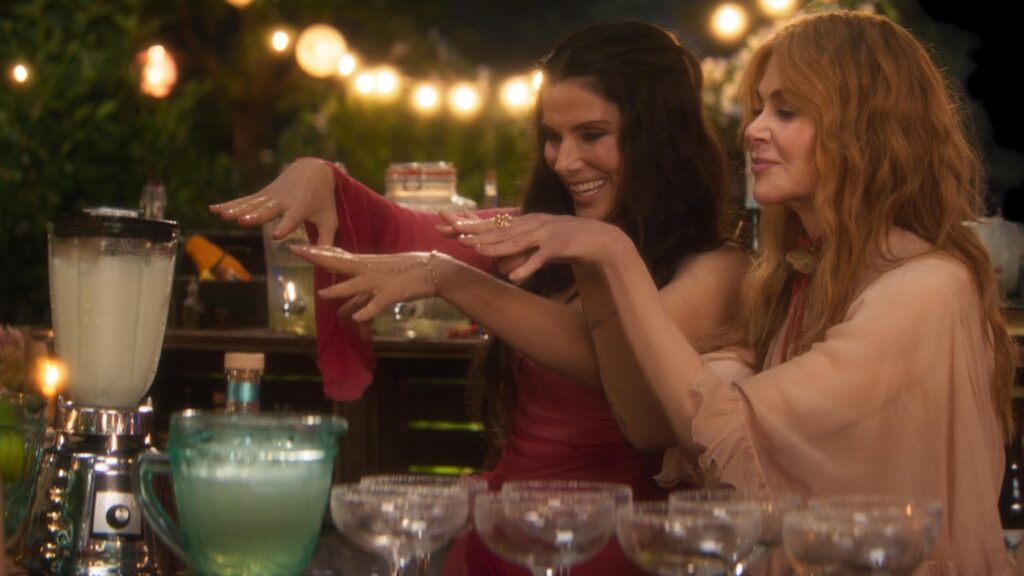
The widest disagreement in this year’s book-to-screen list is Practical Magic 2. Critics gave it 36% on Rotten Tomatoes. Audiences gave it 90%. Book Riot published its round-up of the year’s worst adaptations on 23 October 2026. Read as a set of scores rather than a set of opinions, the list splits into two kinds of failure that reporters usually lump together.
One kind is a film that critics disliked and the book’s readers defended. The other is a film that everyone gave up on. The first kind still has an audience and a future. The second does not.
The scores, side by side
Sort the nine titles by the distance between their two scores and the pattern is obvious. Publishers who kept the existing readers held their audience score. The ones who lost those readers lost both scores at once, which is a harder problem to market your way out of.
| Title | Critics | Audience | Gap |
|---|---|---|---|
| Practical Magic 2 | 36% | 90% | 54 points to the audience |
| Reminders of Him | 56% | 87% | 31 points to the audience |
| Finding Her Edge | 87% | 50% | 37 points to the critics |
| Wuthering Heights | 57% | 74% | 17 points to the audience |
| The Last Thing He Told Me season 2 | 47% | 48% | 1 point, both sides unimpressed |
| Klara and the Sun | 30% | Not given | Critics only |
| Verity | 31% | Not given | Critics only |
| Agatha Christie’s Seven Dials | 52% | Not given | Critics only |
| Cape Fear | 52% | Not given | Critics only |
Scores as reported by Book Riot on 23 October 2026. Where no audience score is listed, the round-up did not give one.
A 54-point gap measures loyalty, not quality
The audience score on an adaptation is partly a vote on the book. Readers who loved Alice Hoffman’s novel arrive wanting the film to work, and Practical Magic 2 had a 1998 film behind it as well, which is two sets of expectations pointing the same way. The audience that gave it 90% arrived to check that the thing it remembered had been respected, not to compare it with a strong year of cinema.
Critics were reviewing a film with no such debt. Book Riot quoted the complaint that it was “overlong, muddled” and that it “strips the franchise of its gothic charms”, which is an argument about craft rather than about fidelity. Both scores can be accurate at the same time, because they answer different questions.
The reverse case is more interesting. Finding Her Edge got 87% from critics and 50% from audiences, with complaints about an uneven plot, predictable arcs and a forced love triangle. A Netflix adaptation that critics enjoy and readers reject usually means the film was built well and built for somebody else. That is the same argument I made about the Harry Potter series having to beat a memory rather than the films, and it applies to every title on this list.
The one that lost both sides
The Last Thing He Told Me returned for a second season and landed on 47% from critics and 48% from audiences. A one-point gap means both sides agree the thing stopped working. That is the most expensive outcome on the list, because there is no group left to market to.
Second seasons are where adaptations usually break. The first season has a novel to draw on and a mystery to close. The comparison being tested by any adaptation is the source, not a rival franchise, and once the source runs out the show is competing against its own first season. A season built on a story the author did not write has to invent the reason to keep watching.
What the review lines tell you that the scores cannot
The quoted lines in the round-up are more specific than the percentages, and they cluster around one complaint:
- Klara and the Sun: “noxious sentimentality” that removed what the novel was about, according to a quoted review, from a film on 30%.
- Verity: an “intensely stupid twist” that made the ending “inconceivably lazy”.
- Seven Dials: a line about no rope being strong enough to hold the disbelief required.
- Cape Fear: a review that says the showrunner threw in the kitchen sink, then the tumble dryer and the aircon unit.
Three of those four are about plot decisions rather than about casting or production. A bad adaptation is usually a well-made film with a story that was re-plotted by people who had to compress a novel into two hours, and who picked the wrong things to keep.
What I have not read
I have not read Klara and the Sun, and I have not read the Colleen Hoover titles on this list. So this is a reading of scores, quotes and patterns, and the one thing I can say plainly is that a 30% critic score on an Ishiguro adaptation is a writing failure and not an acting one. The novel is quiet, and quiet is the first thing a screen adaptation sands off.
The counterargument I take seriously
Someone could point out that audience scores on Rotten Tomatoes are self-selected, easy to game, and skewed by people who have not watched the film. That is true, and it is why I would not use a 90% audience score as a quality measure. It is still the best available measure of whether the people who were going to show up showed up satisfied, and for an adaptation that is the number that decides whether a second one gets made.
Source: Book Riot’s round-up of 23 October 2026, compiled from Rotten Tomatoes scores and quoted reviews.