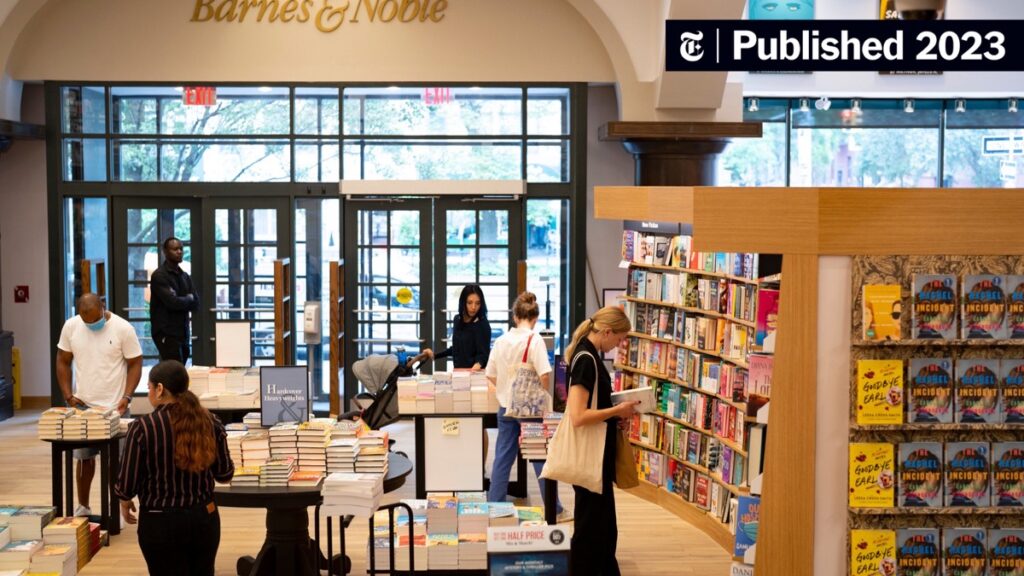
Barnes and Noble’s 16 finalists for its 2026 Book of the Year are six novels, seven nonfiction titles and three books for young readers. The winner is announced on 12 November 2026. The split is the part that matters, because a bookseller’s shortlist records what sold in its own shops as much as what critics admired.
I have not read any of the sixteen. What the list tells you is which kinds of book a large chain thinks it can hand-sell this winter.
The 16 titles, by category
Nonfiction carries 7 of the 16 titles, and the list runs from a Kingsolver novel to a picture book about a plum. Book Riot noted that the list leans towards viral successes, debuts and book club picks, and that BIPOC authors are far less represented on it than on comparable prize lists.
| Category | Finalists |
|---|---|
| Novels (6) | Yesteryear by Caro Claire Burke Whale Harbor by Mary Beth Keane Partita by Barbara Kingsolver Land by Maggie O’Farrell The Calamity Club by Kathryn Stockett Cool Machine by Colson Whitehead |
| Nonfiction (7) | Strangers: A Memoir of Marriage by Belle Burden Sleeping Beauties by David Byrne This Vast Enterprise by Craig Fehrman The Book of Birds by Robert Macfarlane and Jackie Morris Redwood by Ben Macintyre Ottolenghi Simple Too by Yotam Ottolenghi London Falling by Patrick Radden Keefe |
| Young readers (3) | This Is a Door by Daniel Nayeri Is This a Plum? by Dan Ojari and Finn Ojari The Unlikely Tale of Chase and Finnegan by Jasmine Warga |
The shortlist is built to be defensible in a shop
Barnes and Noble had already published its picks for the best books of 2026 across 17 categories earlier in the year. The Book of the Year list is a different exercise. It squeezes those picks into one shortlist that has to be defensible to a customer standing in a shop, and that constraint pushes it towards titles a bookseller can describe in one sentence.
Six of sixteen are novels, which is fewer than fiction’s share of the trade, and seven are nonfiction. One cookbook made the cut and it is a sequel to an established title.
Nonfiction outnumbers fiction, and 4 names carry the novels
- Nonfiction is the largest block. Seven of sixteen titles, covering a memoir, a science-of-ideas book, two histories, a nature book, a cookbook and an investigation. That is a wider spread than the fiction side, where five of six novels sit in literary or book-club territory.
- Established names carry the fiction. Kingsolver, O’Farrell, Stockett and Whitehead have each sold at scale before. The two less familiar names, Caro Claire Burke and Mary Beth Keane, arrive with books that were already being talked about before the shortlist.
- The young readers category is three books wide. A picture book, a middle-grade title and a younger novel. It is the thinnest category on the list, which makes the winner there the least predictable of the four.
The 3 young readers titles matter more than they look
Three slots out of sixteen is a small category, and it covers three different reading ages. Daniel Nayeri writes for the middle-grade shelf, the Ojari brothers have a picture book, and Jasmine Warga writes for the older end of the children’s market. A bookseller putting all three on one shortlist is making a bet that the children’s side of the shop can sell at the same rate as the adult side, which it usually cannot.
The young readers winner is the one to watch. An adult category winner gets a sticker and a reprint. A children’s winner gets adopted by schools and libraries, which is a slower and longer kind of sale.
The list reads better as a shortlist to react to
Sixteen titles work better as a shortlist to react to. Pick one novel and one nonfiction title, read the first twenty pages of each, and you will know more about what 2026 publishing valued than the winner announcement will tell you.
Libraries in India rarely carry the full shortlist on release, so the practical filter is the author you already trust. Kingsolver, Whitehead, Macintyre and Radden Keefe are all writers with a back catalogue you can test cheaply before spending on a hardback.
The list is not a claim about quality. A bookseller’s award measures what a bookseller can sell, and that is a useful thing to know when you are choosing what to read next. It is not the same as a prize jury, and the two lists rarely agree.
Source: Book Riot’s report of 22 October 2026.
A shorter list for this month is in four horror novels for late October, and the Goodreads most-read list shows what people finished in October. More book arguments sit in Book Notes.