Harry hands the trolley witch eleven silver Sickles and seven bronze Knuts on 1 September 1991, in chapter 6 of Philosopher’s Stone, and buys something from nearly every box she has. It is the first money he ever spends on himself. The 2001 film keeps the trolley, the Chocolate Frogs and the beans, and never mentions a price.
What eleven Sickles comes to
Hagrid sets the exchange rate in chapter 5, when he explains the coins in the vault: seventeen silver Sickles make a Galleon. Eleven of seventeen is about two thirds of a Galleon. The Lexicon records Rowling putting a Galleon at around five pounds, which brings the whole trolley run in at a bit over three pounds in 1991 money, with seven Knuts of small change thrown in.
Three pounds is not a lot for a boy with a vault full of gold and no parents to spend it on him. That is the point of the price. Rowling does not describe the sweets as expensive or cheap. She gives an exact figure and lets the reader notice that a first-year can afford to clean out a trolley and still pay for the next one.
The six things the book names on the trolley
The chapter lists the stock in one sentence, and it is the sentence every reader remembers.
“What she did have were Bertie Bott’s Every Flavour Beans, Drooble’s Best Blowing Gum, Chocolate Frogs, Pumpkin Pasties, Cauldron Cakes, Licorice Wands, and a number of other strange things Harry had never seen in his life.” Chapter 6, Harry Potter Lexicon
- Chocolate Frogs come with a collectible card inside, which is where the chapter’s world-building happens.
- Bertie Bott’s Every Flavour Beans are the joke sweet, and the film keeps them.
- Pumpkin Pasties and Cauldron Cakes are the two that sound like food rather than magic, and they are the ones a hungry boy would actually eat.
- Licorice Wands and Drooble’s Best Blowing Gum are the ones nobody quotes, which is why the list feels like a real shop rather than a punchline.
The card is the first thing he opens
The Chocolate Frog is a piece of chocolate with a card in the wrapper, and Harry’s card is Dumbledore. The Lexicon’s character list for chapter 6 shows what the cards put in front of a new reader in one scene: Agrippa, Ptolemy, Merlin, Morgana, Hengist of Woodcroft, Cliodna, Circe, Paracelsus, Alberic Grunnion and Grindelwald. Ten names, none of them explained, all of them working later.
Grindelwald is the one that pays off hardest, because the name turns up on a card in an eleven-year-old’s hand as a piece of trivia and becomes the spine of the seventh book. That is how the chapter buys its world-building. Harry learns the history of magic the way a child learns history, from the back of a sweet wrapper, and the reader learns it with him.
Why the bill matters more than the sweets
Money is the quiet subject of the whole train journey. Ron brings sandwiches from home, and the Lexicon notes that his mother packs corned beef, which is the one filling he does not like. Harry buys a trolley. The two boys split it, and the friendship starts on the back of the one thing Ron cannot do, which is afford any of it.
That is why the exact amount is worth writing down. A book has to say eleven Sickles and seven Knuts, because a book is made of words and the number is the only way to show abundance. A film does it with a shot of a trolley and the shape of a boy’s face.
What the 2001 film keeps from the journey
The film keeps the journey and it keeps the meeting, which Wikipedia’s plot summary of the film records as the point where Harry meets Ron and Hermione. It keeps the trolley and the Chocolate Frog, and it plays the beans for a laugh. What it drops is the arithmetic, and with the arithmetic goes the class contrast, because a viewer sees Ron with sandwiches and never learns why that matters.
The trade is reasonable. Two hours of film cannot stop for a lesson in wizarding currency, and a scene that explains exchange rates in a train corridor would have died on screen. The book can afford it because a reader will happily take a sum of money as a detail.
What a weekly series should do with it
The show opens on 25 December 2026, and this is one of the few scenes in book one that gets better with more time. A series can sit in the compartment for three minutes, let the trolley come past twice, and show Ron counting his coins before Harry offers. None of that needs dialogue. It needs a camera that stays in the room.
The reason to spend the minutes is that the rest of the book runs on money. Ron’s wand is a hand-me-down, his robes are second-hand and his rat is his brother’s. A series that establishes the gap here does not have to explain it later, and a series that cuts it has to find another scene to do the same work.
Harry leaves King’s Cross with a trunk, an owl and a pouch of gold, and the first thing he does with the gold is buy sweets for a boy he met an hour earlier. The bill for that is eleven Sickles and seven Knuts.
The Movies and TV hub carries the rest of the Harry Potter posts from this week.
Also read:
- The Letters Reach 3 Addresses Before Hagrid Knocks at Midnight
- A 7-Step Reading Plan for Film-Only Fans Before 25 December
- The Film Cuts the One Diagon Alley Scene That Introduces Draco
Sources: the Harry Potter Lexicon chapters 5 and 6 at hp-lexicon.org, and Wikipedia’s plot summary of the 2001 film.
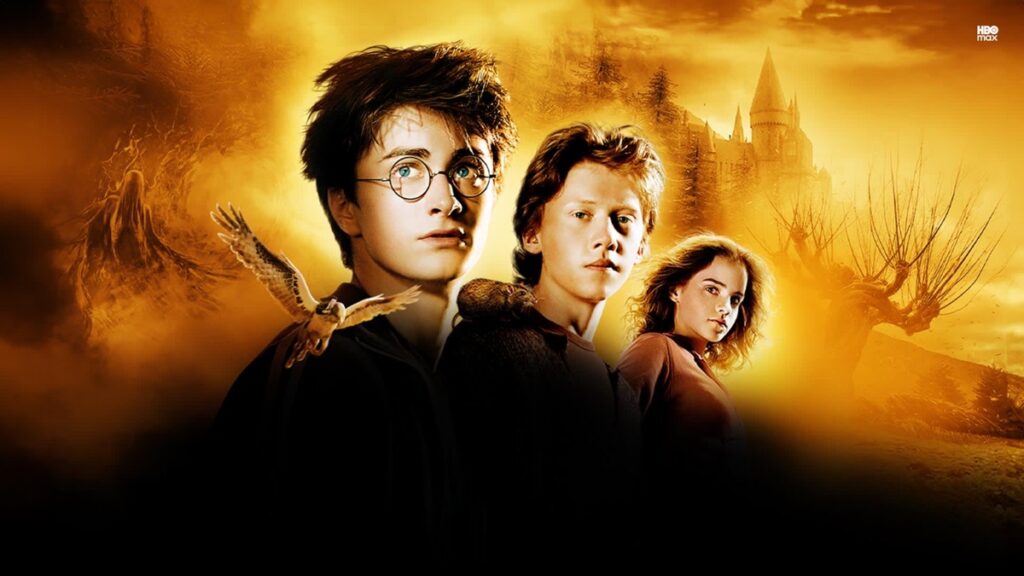
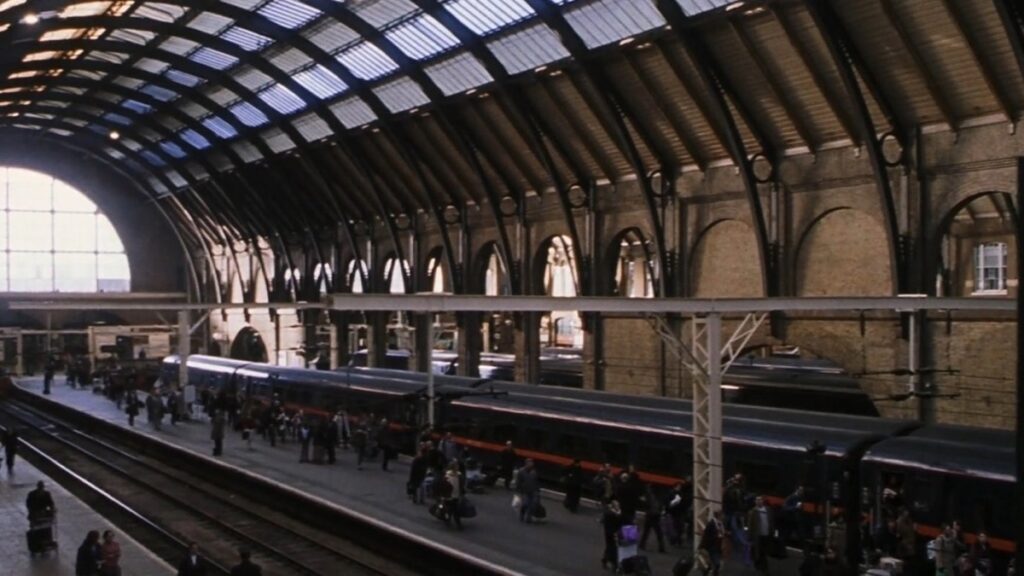
Image: King’s Cross in the 2001 film, where the journey in chapter 6 begins. Still via the Harry Potter Wiki.