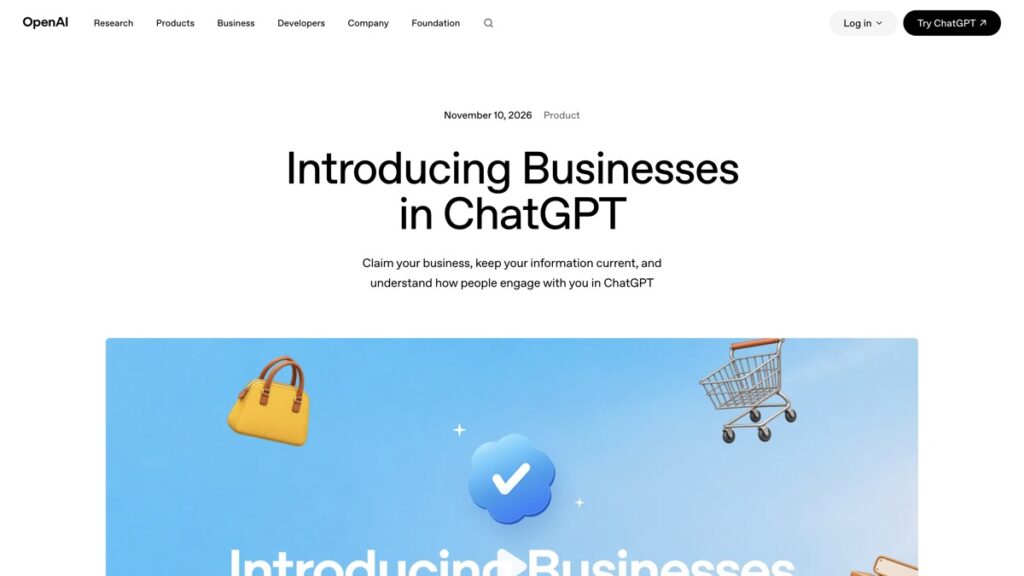
OpenAI opened Businesses in ChatGPT in beta on 10 November 2026, and the tool behind it is called Business Hub. You claim your business there, verify the domain with a DNS text record, add a category and a description, and then read two numbers: mentions and website clicks. OpenAI states that claiming a profile does not guarantee higher placement, so the work that follows the claim matters more than the claim.
What Business Hub actually gives you
- A claimed profile you can edit, once verification clears, including the public name, description and category.
- Product feeds with pricing and availability, so ChatGPT has current details instead of guessing.
- Insights on mentions, website clicks and the topics where your site is cited, shown only once enough conversations clear OpenAI’s reporting thresholds.
- A Business Agent, available for eligible ecommerce and online service businesses in the United States at launch, where a reader can ask follow-up questions about the business.
OpenAI puts ChatGPT at 1.2 billion weekly users in the same announcement, which is the number to keep in mind when the profile work starts to feel optional. The insights are aggregated, and OpenAI says business owners do not receive anyone’s conversations.
4 steps to finish before you claim
- Get access to the domain’s DNS settings. Verification is a TXT record, and whoever holds that login decides how long the claim takes.
- Know the legal name, the trading name and the registration or tax identifier your country uses. Search Engine Journal had trouble with one field because the placeholder looked like a United States employer number while the form wanted a state registration number.
- Write the description in the words customers use, not the words on your homepage. The field tells you ChatGPT may share it in relevant conversations, which makes it the closest thing here to a meta description.
- Decide who holds the admin seat. The person who claims the business can invite teammates afterwards, and each invitee uses their own ChatGPT account.
The first step is the one that stalls a week in most companies, because the DNS record usually sits with a developer or an agency rather than with marketing. Ask for it before you open the form.
What verification asks for
Search Engine Journal walked through its own submission on 12 November 2026, which makes it the most useful record of the form so far. The identity check runs through Persona, with a QR code or a secure link that you finish on a phone. Camera access is needed and no app download is.
The business fields are name and trading name, country, whether you are a sole proprietorship or an entity, a website, a physical address, and a legal registered address when that differs. P.O. boxes are refused. Approval automatically publishes profiles created through Persona, and the same approval adds a blue badge.
One rough edge is worth knowing in advance. Search Engine Journal was asked about delivery and returns after choosing a publishing category, which are odd questions for a magazine. Answer them in a way that reads sensibly on the public profile rather than leaving them blank.
The 2 numbers that look impressive and mean little on their own
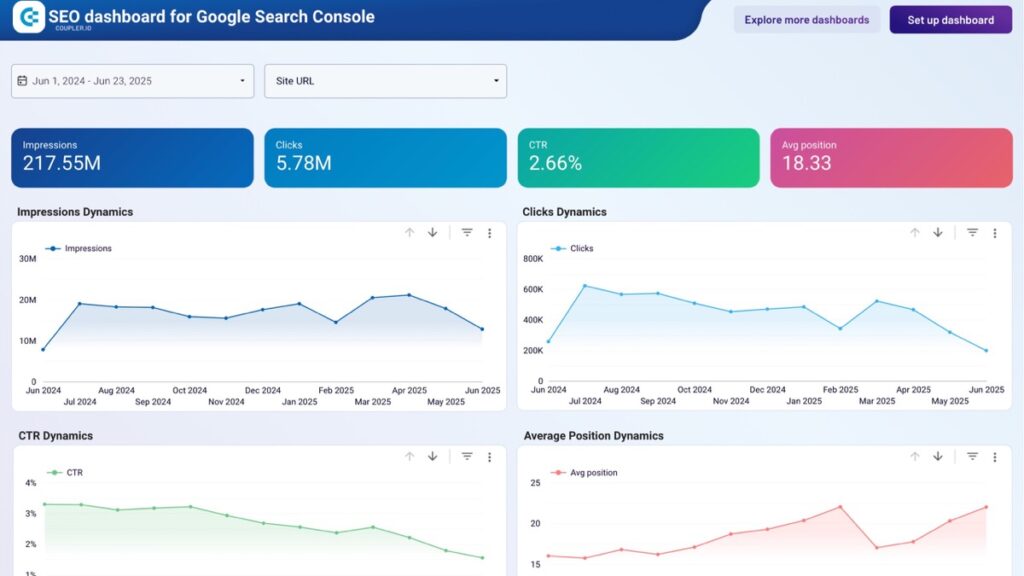
The insights screen is the part everyone will screenshot. For context, the figures Search Engine Journal published were 353,356 mentions and 2,663 website clicks across 14 October to 10 November 2026, from its own dashboard.
Read those two numbers together before you report either one. A mention means ChatGPT referenced the website, and for an online business the brand name alone does not count. So a five-figure mention count beside a four-figure click count is a normal shape, and it describes how often your site was quoted rather than how often anyone arrived.
The useful move is to put the same date range in your analytics and look at arrivals from AI surfaces. GA4 still misses 4 kinds of AI visit, so a gap between the two is expected rather than a fault. What you are looking for is the direction of the two lines over four weeks, not one month’s totals.
Where this differs from Google Business Profile
Business Hub accepts eligible online businesses, which Google does not. Google’s own eligibility guidelines list brands, organisations, artists and other online-only businesses as ineligible for a Business Profile. Search Engine Journal makes this point directly, and for a publisher or a services firm with no shopfront it is the difference between having a profile and not having one.
Two limits are worth saying out loud. Business Agents are limited to eligible ecommerce and online service businesses in the United States at launch, so the agent is not an India question yet. And claiming is open to eligible businesses where ChatGPT is available, which means the country you are registered in decides whether the form works for you today.
There is also a shortcut for some stores. Shopify merchants can connect their store from Business Hub or from the Shopify admin instead of running the DNS check by hand.
What a profile does not override
OpenAI’s own policy says a profile can include information the platform gathers from other sources, so the claimed page is one input rather than the final word. That places the usual consistency work in front of the claim instead of after it. Name, address and phone should match across the site, the social profiles and any business listings.
If a rebrand left both names in circulation, explain the relationship on the site and in the description, and keep the legal name only where verification asks for it. A reader who meets two versions of a company gets a thinner answer than one who meets one version twice.
What to do this month
Claim it if you are eligible, because a profile you control is worth more than the alternative of being described from scraped pages. Write the description for a reader who already knows what they want and needs to know whether you do it. Then wait for the mention and click numbers to build up, and compare them against your own analytics on the same dates before anyone is told a growth story.
The wider pattern is the same one behind ads arriving in AI Mode and the reasons a blog post never gets cited. Platforms are building surfaces where a business can be present in the answer, and each of them asks for structured facts rather than better prose.
A claim is a start. Winning the ad auction did not guarantee an impression on this platform either, and no profile setting changes that. The AI search hub has the rest of these notes.