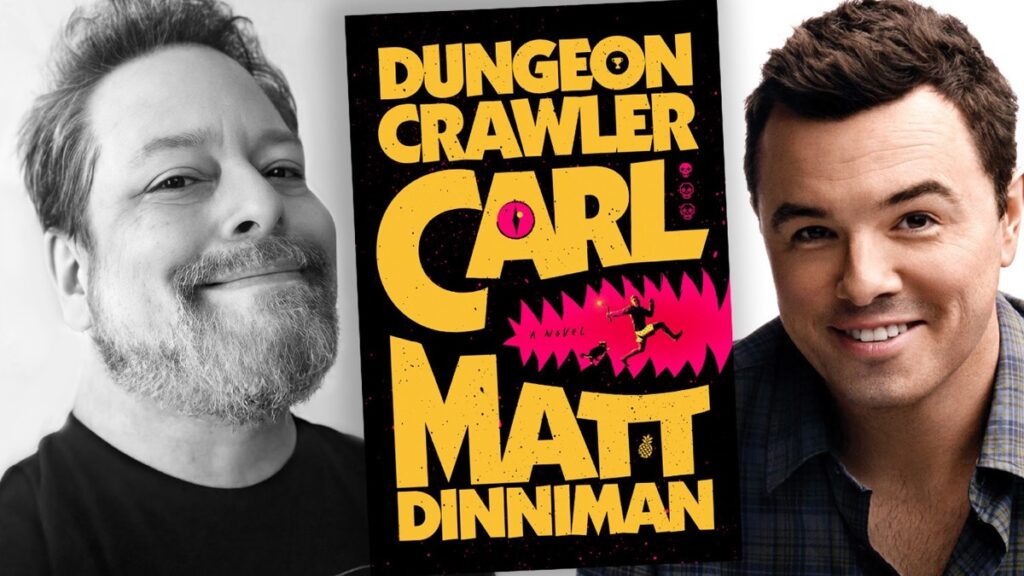
Peacock has greenlit a live action Dungeon Crawler Carl series, with filming set to begin in 2027 and both the author and the audiobook narrator attached. Variety reported the news this month, and if you have never heard of the books, the sentence probably read as an oddity: a streaming platform buying a series you have no memory of being told about.
That is the interesting part. This genre has been arriving for a decade in a place the publishing industry does not look. The adaptation is just the first time it has to introduce itself to everybody else.
Two different contracts with the reader
| Dimension | Progression fantasy and LitRPG | Conventional literary fantasy |
| Progress | Enumerated. You can see the number move | Implied, often deliberately vague |
| Pacing | Chapter cadence, steady increments | Variable, shaped by theme rather than schedule |
| Payoff | Guaranteed. The contract says the hero improves | Optional. Ambiguity is allowed |
| Length | Twelve volume series are normal | Standalones and trilogies dominate |
| Discovery | Serial first, collected later, audio often first | Print first, adaptation after |
Both columns are honest. They are simply selling different things, and the left column is much easier to scale.
The number is a promise, not a gimmick
The most parodied element of the genre, the stat screen, is also the least important. What matters is legibility. The reader knows exactly where the character stands, what changed last chapter, and what the next threshold is. Progress is enumerated rather than implied, which converts a story into something closer to a ledger.
That promise is enormously appealing to a particular kind of reader, and it guarantees the payoff. There is no chapter where the hero marks time, because a chapter where nothing increases breaks the deal, and this audience is extremely vocal about broken deals.
It was never a publishing decision
- The books were built in public, chapter by chapter, on serial platforms where the release schedule is the product.
- The collected volumes arrived after the audience, not before it. The book is a souvenir of something readers already experienced weekly.
- Subscription reading pays by the page, which turns a twelve book series from a liability into an asset.
- Audio is the primary format for a large share of the audience, often with a narrator the fandom treats as a co-author.
That last point deserves more attention than it gets. A long series with a committed narrator converts commutes into reading time, and the single most common recommendation in the genre is a version you listen to, which has quietly turned choosing what to read next into a question about format.
Why the industry kept missing it
Traditional attempts to import this material usually treat it as an acquisition problem, then expect the titles to behave like novels. That misses the cadence, the price expectation, the sheer volume available inside a subscription, and the relationship readers have with the audio.
The harder issue is that the audience is already served. They have a payment model, a recommendation network and a hundred thousand pages queued up. Entering that market with a slower schedule, a higher price and one volume at a time asks readers to trade down.
What the adaptation has to decide
The television version is the real test, and not because of casting. The genre’s promise is that the ledger is visible. Strip the numbers out and you have a survival story in a dungeon, which is fine and much less distinctive. Keep them and you have to solve a genuine craft problem: how to show progress without turning every episode into a spreadsheet.
That is the same problem the books solved on the page with a running gag and a very funny voice, which is exactly the sort of thing that survives adaptation when the adapters understand what the audience is actually there for.
What it says about discovering readers
A genre built an audience of real size, with its own storefronts and its own star system, while the part of the industry that claims to be finding new readers was looking at a different shelf. The gap was in where people were looking.
The next one will develop the same way, in public, on a platform, with an audience that already exists before anybody in a meeting has heard of it. That is the lesson, and it does not require publishers to chase this particular genre. Readers are not short of attention. They are short of reasons to keep giving it, and this genre is unusually good at providing one every chapter.