The line everyone shared on Thursday came from Google’s own marketing account. “AI didn’t make your brand invisible in Search. Your content did.” The caption paired it with “Stop the ‘Top 10’ listicle” and “start leading with first-hand expertise.” Three numbers sit in the article that caption links to, and they are the part worth planning around.
One of them says people using AI search visit 12 touchpoints before they buy, nearly three times the count in a journey without it. That number argues for more specific pages, not fewer pages of any particular format.
What Google published, and when
Search Engine Journal traced the post to a Think with Google article published on 14 October 2026, written by Brendon Kraham, Google’s VP of Search and Commerce Global Ads Solutions. The article’s three priorities are the super-empowered consumer, brand authority through expertise, and business outcomes. The “Top 10” line sits inside the second one, and the caption on the X post of 19 November pulled it out alone.
3 numbers under the line
These are Kraham’s own figures, with the qualifications the page gives.
- 12 touchpoints in a buying journey for people who use AI search, described as “nearly 3X more than in non-AI journeys.”
- 3 in 4 people on Google say AI features help them make faster and more confident decisions.
- 3 priorities for CMOs, which is the structure of the whole piece rather than a finding.
Both of the first two carry footnote markers and no named study in the page text I could read, so I treat them as Google’s own figures rather than independent research. That does not make them wrong. It does mean a client deck should say “Google reports” rather than quoting them as survey results with a sample size.
The 12 touchpoints figure is the one I would put in front of a client. If a shopper meets a brand a dozen times before buying, the pages that get them there are specific answers to specific questions. A single generic list cannot cover 12 stops.
The example the article uses
Kraham’s illustration is a running store. Instead of publishing a generic “Top 10 Things to Consider,” he says it could make a video explaining why one customer’s running shoes collapsed. His words on it: “That isn’t a generic review anyone could have written. It’s highly specific, real-world advice.”
Read the example closely. The format the article names is a tips list, and the replacement is a teardown of one real object. Nothing in it says a ranked list of products is bad. It says a list of considerations that any competitor could have written is bad, which is a different claim and a much easier one to act on.
Google’s Search guide uses a different example for the same rule
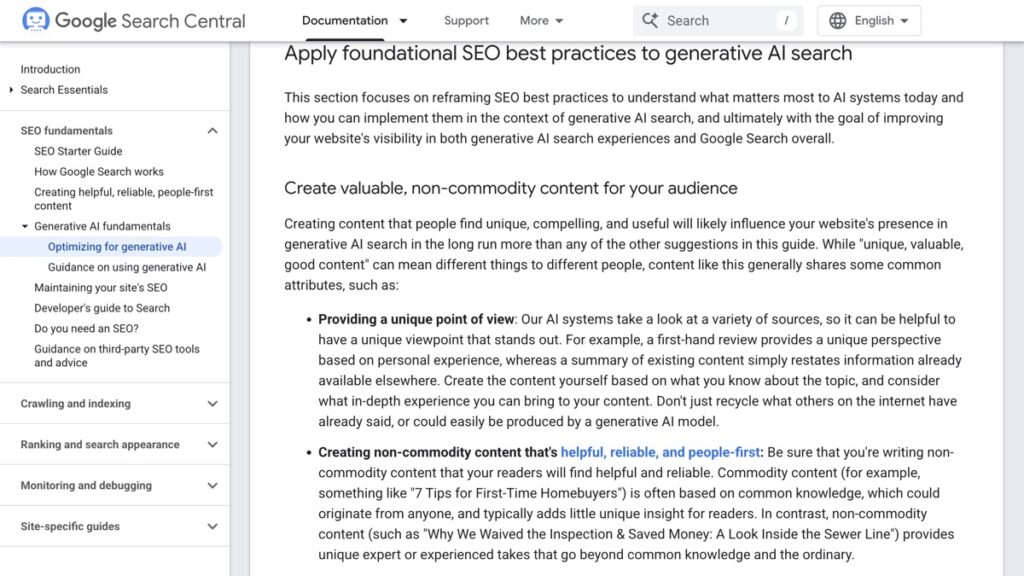
The SEOs who pushed back on the post were reading it as a ban on listicles. Google’s own guidance for website owners draws the same line with a different pair of examples, in a guide published in May 2026 and linked from Search Central.
| Google document | Dated | What it calls commodity content |
|---|---|---|
| Think with Google article by Brendon Kraham | 14 October 2026 | A generic “Top 10 Things to Consider” post |
| Search’s guide to optimising for generative AI features | May 2026 | “7 Tips for First-Time Homebuyers,” set against a first-hand piece about waiving a home inspection |
Neither document names a “best of” list or a ranked product roundup. The test in both is whether the person writing it had the experience nobody else has. A list of ten air purifiers you bought and ran for a month in a Jaipur summer passes that test. A list of ten considerations copied from three other posts does not, whatever the headline says.
What changes on Monday
Two things, and neither needs a delete button.
- Take your best-performing listicle and check whether it contains one detail only you could have written. A measurement, a photograph, a return rate, a support ticket. If it has none, that is the page to rebuild rather than the format to abandon.
- Move the reporting line off visibility scores. Kraham asks CMOs to plan on “real business goals like leads or sales, not unproven proxy metrics.” An AI visibility score nobody has correlated with revenue is the proxy metric he means.
The second one is uncomfortable for a lot of agencies, because AI visibility dashboards are easy to sell and hard to defend. I have been asked for those scores more often this year than for rankings. If the score moves and enquiries do not, nobody has learned anything.
What the numbers do not show
The article carries no country split. Nothing in it tells you whether shoppers in India behave like the sample behind those 12 touchpoints, and the page does not name the sample. For an Indian store selling to Indian buyers, treat the figure as direction and check your own path length in Analytics before you rebuild a content plan on it.
Google also used the same post to restate something less quotable, that its generative features lean on core ranking and quality systems. On the files people were told to publish last year, the number is in 97% of llms.txt Files Get No Requests, So Publish One for Coding Agents. The version of this argument written against one company’s own guide is 5 Numbers in Salesforce’s Own SEO Guide That Its CEO’s Post Leaves Out. More of it sits in the AI Search and Getting Cited section.
Also read:
- 4 Checks Before You Change a Page That Lost an AI Citation
- Why Your Blog Posts Never Show Up in AI Answers
- 6.9% of 41,961 ChatGPT Conversations Showed Purchase Intent in a US Panel
Sources: Google’s Think with Google article on brand authority in generative AI search, 14 October 2026, Google Search’s guide to optimising for generative AI features, and Search Engine Journal’s report on the 19 November post.