WordPress 7.2, due on 8 December 2026, replaces the default theme with Ipsum, a deliberately minimal blog theme built as a blank canvas, and ends the year-based naming that produced Twenty Twenty-Five. The theme most agencies will be asked about is Mētis, and Mētis does not ship with WordPress at all. It is now the project’s flagship theme and downloads separately.
Release Candidate 1 went out on 17 November 2026. No new features arrive after that point, so what exists today is close to what lands in three weeks.
What the 7.2 release actually changes for a site
An update adds a theme to the site. It does not switch the active theme, so a client site keeps the design it has and gains one more entry under Appearance. The practical change is smaller than the announcement reads, and the conversation with a client is about naming, not downtime.
That naming change is the real news. Default themes used to be named after the year, so the theme bundled in 2026 would have been Twenty Twenty-Six. Matt Mullenweg’s direction, recorded in the September introduction, is that defaults now carry their own names and change when the design calls for it rather than when the calendar does.
Three consequences follow for anyone who writes or maintains documentation. A tutorial that tells a client to switch to Twenty Twenty-Six is wrong. A plugin readme that lists tested themes by year tells you nothing about 7.2. And the default theme is now something an organisation can keep for years, which makes it a more reasonable choice than it was.
Ipsum is minimal on purpose
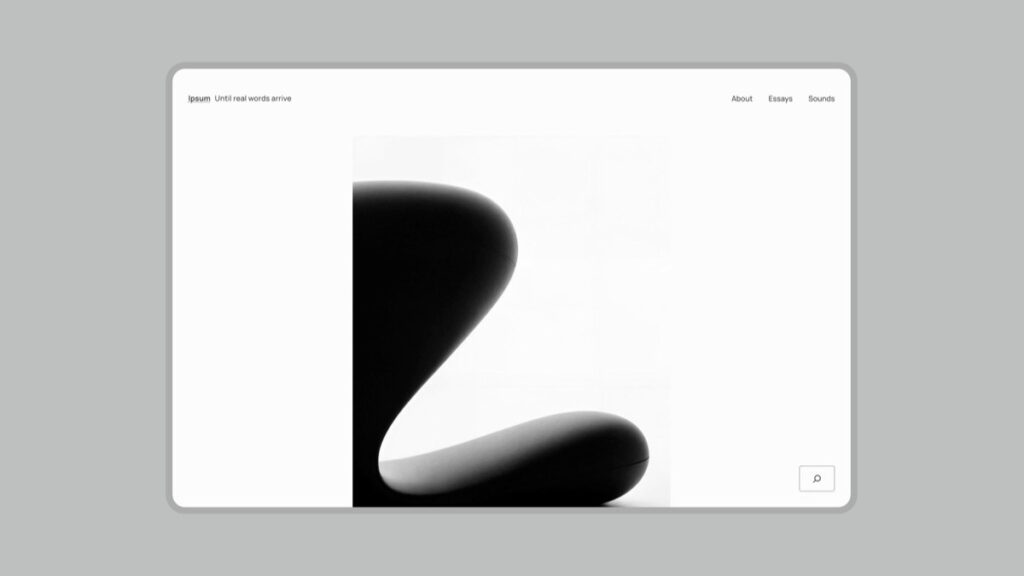
Ipsum is a blog theme with a blank canvas at its centre, planned for 7.2 from the start. The team’s own words are that the default should be the simplest possible starting point, while a more expressive design can stand on its own.
That is a reversal worth noting. The first direction for the default was Mētis, a theme for writers and makers with far more built in. It was moved out of the default slot because Matt wanted a simpler blank canvas that more people could make their own.
So the default becomes lighter and the optional theme becomes heavier. If you remember the previous cycle, where the default carried the new editor features as a showcase, 7.2 does the opposite.
What Mētis carries that a default cannot
Mētis ships six starter sites, each one a page template plus a page pattern, covering a business studio page, a news front page, a magazine issue, a portfolio, a writer’s home and a personal page. It also brings fifty section patterns grouped by category, three headers, five footers and three layouts for single posts.
Six style variations change type and colour across the whole site at once, one of them a dark version, and nine open-source type families are bundled. Its design lead is Henrique Iamarino, with development led by Carolina Nymark, Maggie Cabrera and Juanfra Aldasoro.
The two themes are not interchangeable, and the difference decides which one a client project should look at:
| Ipsum | Mētis | |
|---|---|---|
| Role | Default theme, bundled with 7.2 | Flagship theme, separate download |
| Design intent | Blank canvas to build on | Expressive starting point for creators |
| Starter sites | None | 6, each a template plus a pattern |
| Section patterns | Not the focus | 50 |
| Style variations | Minimal | 6, including a dark version |
| Best for | A simple blog or a base to extend | A studio, magazine, portfolio or writer site |
Three checks before 8 December
- Record the active theme and whether a child theme exists. The update will not change either, and knowing the answer is what stops a panicked call on release day.
- Check every plugin’s tested-up-to version and the PHP version it supports. The RC1 notes list PHP 8.6 compatibility work and bundled library updates, and the checks that matter are the same ones we ran before the betas.
- Test the update on a copy, not on the live site. A staged copy and a rollback plan cover more than a plugin-by-plugin read of release notes.
The RC1 announcement lists what changed since Beta 5 and gives four ways to test it, including a WordPress Playground link that needs no setup. The Mētis introduction and the earlier Ipsum post are short reads and both are worth ten minutes before a client asks.
Where the theme question usually goes next
Most client sites on WordPress are not on a default theme, so the 8 December release will not change how they look. The question that follows is whether a block theme is now worth using for a new build, and the answer depends on who edits the site after handover rather than on what ships with core.
If a client will edit pages themselves, a block theme with starter patterns removes work that a page builder used to do. The pre-release checks for 7.2 are the ones to run before any theme change lands on a live site. If the site is a blog with a handful of templates, Ipsum is close to enough as it stands.
Two older pieces cover the parts that break during this kind of work. What a backup must hold when a host deletes 189 files is about the copy that makes any theme change reversible, and copying a site with Reprint is the fastest way to build the staging copy you need first. More on this beat sits in the WordPress care hub, including the four checks before a plugin goes in.